1X
Subscribe:

Just enter your details — and we’ll send you the latest insights right away.
04:15 The Outer Work project
08:45 Somatics and social change
13:10 Relating to the social justice movement
16:30 Polarization as a political tool
20:30 The ethos of a highly individualistic culture
28:20 The mechanisms of maintaining “power over”
31:00 Uncovering systemic biases
36:30 Becoming more whole human beings
42:30 Scaling “power-with”
48:00 Non-pathologizing but discerning
54:15 Empowered cultural responsibility
1:00:30 A daily practice of cultural inquiry
1:06:30 The process of social transformation
Resources Mentioned:
Erica Chenoweth
Critical race theory
Third-wave feminism
Van Jones
Designs for the pluriverse, by Arturo Escobar
Charles Eisenstein
Chandra Mohanty
Bell Hooks
Marvin Oka
Martin Luther King
Buckminster Fuller
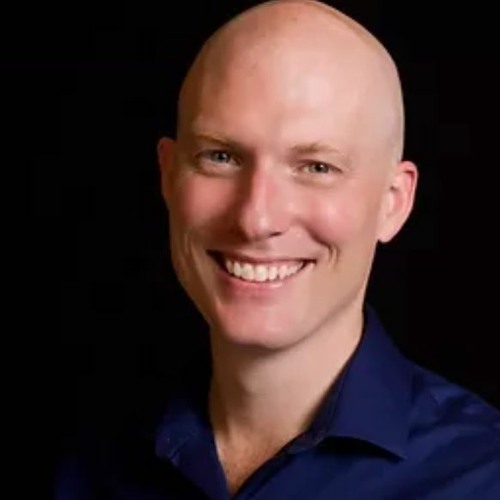
Joel Monk: [00:00:19] welcome back. This is the coaches rising podcast and I think this is a really important conversation I'm joined by Stacey Haynes today and we're going to explore how can we take positive action in the world, action oriented around creating positive transformation without creating further polarization or adding to the problem and Stacey has created the Outer Work project with several others to empower people to do this, how to act in the world without creating further polarization. And I must admit when I was first invited to support this project, I felt resistant. because of that potential and I wanted to remain more apolitical and actually the journey went through as I've recognised that I was bypassing and actually of course there's an absolute need for action in the world and for a political action too. [00:01:15] hopefully that political action is rooted in love and a sense of serving the greatest whole. And so this is a really vulnerable podcast because in this we share our, well, I share my resistances and some of the criticisms I've had with the liberal upbringing that I've had, the liberal wealth you. And I think Stacey just embodies so beautifully what she's talking about by the vulnerabilities that we share bringing it into deeper connection and mutual understanding.
Joel Monk: So it's all about, you know, what is the role of somatics? and our inner work in supporting us to be able to do outer work more effectively without creating more polarization. [00:02:05] So what a great topic for our time. So a few more words about Stacey. She is a masterful coach. A pioneer in the field of somatics, working at the intersection of trauma healing, embodied leadership, and social justice, teaching internationally, the author of the politics of trauma, somatics healing, and social justice, and another book healing sex, and mind-body approach to healing sexual trauma, and she's also a senior teacher at the Strozzi Institute. Let's dive right in. So they see it's very good to be with you today and as I was saying before we hit the record button I'm excited about our topic.
Joel Monk: I think it's going to be a little, it's going to be a rich topic and maybe have been a little vulnerable to explore but I love that about being in connection with you as like we always can just get into stuff. So how are you first of all?
Staci Haines: [00:02:59] Um, I'm really glad to do this too, like I've really appreciating our conversations that led up to this. [00:03:05] I'm looking forward to just heartfelt conversation together. And how I am. I'm good. I'm actually on with my family and Colorado right now where I grew up, but I'll tell you I can feel the altitude. It's like walk up the steps and then I'm at a breath. So I'm adjusting.
Joel Monk: [00:03:24] Kind of cool, isn't it? But we can visit places like that. Maybe to begin with, we're going to talk about the outer work project today while you're creating this and what it is and I think that that's, you know, we'll lead to some really interesting kind of questions. Could you say to people listening just in a couple of sentences like what you do and then and then tell us about what the outer work project is?
Staci Haines: [00:03:51] For sure, so I am 30 plus years in the field of somatics or embodied transformation. And then at this point I call it sometimes politicized somatics, like a somatics that acknowledges a social conditions and how they shape us. [00:04:07] I do coaching, I do teaching, and I work a lot with organizations inside of a social change and climate.
Joel Monk: [00:04:17] And so, yeah, I got this email from you, you know, last year inviting to kind of support this project, the outer work project, which I found even the title is quite revealing.
Staci Haines: [00:04:31] Could you say, like, what the outer work project is, why you created it? body transformation time online. These last five and six, six years out of the pandemic. And one thing I heard people say over and over again is like, I really care, but I don't want to do about the bigger social issues. [00:05:02] And I've been a person who cares deeply about internal cultivation, healing, transformation, and I care a lot about what's happening in our society's economies. So the outer work project does really abridged between those two things. Like how do we invite people who really care about the inner work about coaching, about trauma healing, and invite them into a project or a process that lets them know what the kind of levers of social change are, and then how to engage in a positive way in a social change.
Staci Haines: You know, I think of that battle as life affirming social change, like what's a society and economy that we want to hand over to our grandkids or to the next generations that we actually feel proud of instead of a apologetic for.
Joel Monk: [00:05:54] How will you, uh, what's the intention of the project? How will you bring about this, you know, uh, life affirming change? [00:06:04] That's the question.
Staci Haines: [00:06:08] is all over her questions, so there's a political scientist who I really respect right now. Her name is Erica Chenoweth. She's at Harvard and she studies authoritarianism and fascism. And obviously there's a trend in our broader world toward authoritarianism right now and in her study she really looks at if 3.5% of a population is mobilized toward social change, equity and taking care of the environment, that there's a very high success rate, either preventing authoritarianism or actually changing it. And I, I said in the United States, and we are in a place right now. that is leaning toward authoritarianism. And so the Outer Work Project is really kind of doing my part of mobilizing 3.5% so that's 9 million people in the United States.
Staci Haines: [00:07:04] Now, that where project itself is not going to mobile, that's 9 million. But I really wanted to create a very welcoming depth-full space that invites people again who care and have really done self-cultivation to almost like scale up to the next level of care where we're like, okay, I care about social change. How do I join to make a bigger difference? At the end of the Outer Work Project, we'll help people basically partner or fit in with social change organizations that are aligned with what they care about and what their values. So it might be that someone comes through and they really care about voting rights. Great, we're gonna connect them to a voting rights organization. And we're asking everyone to then engage five to 20 hours a month to as a volunteer, right, to be a part of making a bigger difference.
Staci Haines: [00:08:02] Folks don't have to change their work or it's just like, it's amazing, really, how a few hours a month adds up.
Staci Haines: [00:08:12] to growing that 3.5% and together getting to make a bigger difference.
Joel Monk: [00:08:19] What's the before I share a little bit about my some thoughts I have in my journey with your email reaching out? Let's just could you say something first about somatics and what somatics has to offer in service of that kind of change that you think is really important
Staci Haines: [00:08:42] Yeah, I really thank you so much for even knowing to ask that question. So two things, it took me a while to really understand that our social condition for the social norms, the economies that we operate inside of. [00:09:00] deeply shaped us somatically. And we wouldn't think that because mostly we relate to our more personal experiences or interpersonal experiences or how we are shaped by our families or communities. And so when I, you know, in this passion of mine of connecting personal and social transformation engage more and learn more about social transformation. I saw how much we often embody things that aren't even aligned with our own values. from the social norms, or when we go to take on more leadership or get actively involved, sometimes those things are limitations, like let me just give one example because I know we're going to talk about it today.
Staci Haines: Most of us didn't learn how to hold complexity, without moving into taking a position and taking a rigid position, instead of being able to hold is really good at helping us know how to hold or learn how to hold complexity without polarizing. [00:10:10] Another example might be, let's say we're hurt by social norms, let's say we're hurt by homophobia, or we're hurt by sexism, or we're hurt by racism. That hurt is a kind of trauma that actually needs To then go, how does my leadership not be driven by my trauma, but rather be driven or inspired by a vision? Does that make sense?
Joel Monk: [00:10:40] Totally, yeah. I mean, maybe that kind of is a good segue. I think what you're talking about, we're just touching the surface of, and I'd like to spend quite a good portion of our conversation, you know, going deeper into what you talked about just now. But I think you've just opened up when you reached out to me. [00:11:03] I said, let me think about this day, because the initial response I had was, I want to put, I want to be part of things that don't reinforce that sense of polarization. So I was like, where are you coming from with this initiative and what is the ideology behind and it's been a really powerful journey because I feel like a commitment to taking action from a place of vision and a sense of what will serve the whole, you know, the diversity, but also the unity of the whole. And what I saw was that I think I was caught in a little bit of spiritual bypassing in a sense of that I was also resisting the need, actually, that we do take action, and that part of that action is political.
Joel Monk: [00:12:14] So, There's, it seems, you know, as you've been named, it's been an increasing sense of polarization of the last decade, 15, 20 years, you know, maybe with, particularly with social media, coming on strongly in an exacerbating issue. And as I shared with you before, like I wouldn't have even if the backlash right now in the US and particular has been over the last few years critical race theory and certain ideologies which have been labelled work and I think you know in a derogatory sense you know so yeah I'm kind of getting to it's like it's complex and I feel the call to take action but I also don't want to take action in the way that's like othering people and actually just reinforcing the very issue
Staci Haines: [00:13:14] right, right, right, right. Okay, you said so many important things. So I'm just going to, well, we can just dig into this. First of all, I think a lot of us who are drawn toward healing and transformation are really drawn toward a kind of harmony and possibility and that sometimes pain of the world is hard. I think many of us in this work are really sensitive people and are really faced the world. I go, oh my god, there is so much poverty. Like, there is concentration of wealth in a way that hurt so many other people.
Staci Haines: [00:14:02] Like to really face it as very, very painful. And I think when you talked about spiritual bypass, I think understandably it's also a good survival strategy, but many of us will go toward the hope of unity, the possibility not wanting to get into quote, the politics, right, which we mean many different things by that, but not wanting to get into the, the hurt, the polarization, the, backbiting the throwing stuff at each other that that that world of politics can often look like. So I just want to stop with that for a minute because one of the tricky things about both I think engage in deep internal change and engaging social changes. There are moments where we have to pause and face the pain of things. And I think that part just hurts. It's like, oh, well, that's not what I want or that's really painful to feel or how did that just happen to my neighbor. [00:15:03] And to me in some ways, coaching and somatics help us grow our capacity to pause and let things in, face things, letters else feel in process pain.
Staci Haines: Then we don't want to get lost there, but it is one of the parts of, We're responding to our world rather than reacting of bypassing our world, right?
Staci Haines: [00:15:26] So I want to move to the second piece but is there anything you want to say about that?
Joel Monk: [00:15:33] No, I think it's well said and not to just keep you in your flower and trust will kind of leave it all together.
Staci Haines: [00:15:42] Yeah. When we talk about polarization, I want to think about it in a couple of ways.
Staci Haines: [00:15:50] If we look at it through a transformational lens or a somatic lens, we can understand polarization as kind of a survival strategy. We're just like, [00:16:01] I can't deal with that or I can't face that or I can't feel safe with something that feels very different and unknown to me. So I'm going to pull over and I'm going to pull or rise against that as a way to find safety belonging or dignity in some kind of way. None of us like being chained or made wrong, right? Like we have a self-preservation as that wants to fight for our own dignity or fight for our own safety. So if we look at it as a healthy, not the human to get stuck there, but as a survival strategy that makes sense, to me it's a real ground for compassion. If we look at polarization more through a lens of,
Staci Haines: power and people are institutions trying to gain power, polarization gets used as a way to make another group bad or warm into some way disempower them in some way. [00:17:01] Now I think it gets used all the time throughout history politically. I mean we could look at apartheid South Africa. We could look at the era of Nazi Germany. We can look at our current politics. It's like what group people are nation is being made wrong to validate a polarization or a taking over or a power over move to that group. Now, so I think we have to be, new ones in which pulmonary polarization we're talking about.
Staci Haines: Are we talking about the personal emotional self-preservation? I want to have dignity and belong, or are we talking about the concentration of power, polarization? And of course, they both get used together. So I just want to say, you know, I'm white, a woman, I grew up in the United States. And I grew [00:18:03] And I really watched the current U.S. administration use class and rames to polarize and move a certain segment of the population into a more authoritarian perspective and invent that phrase wokeness. Now, I also saw some of the people who are really fighting for racial justice, gender justice, polarized in a way that made other people bad. And I think it was a not good strategy.
Staci Haines: You know, when I go, what's it? What's at our heart? If equity is at our heart, it's like we have to, this is my view, make a transformative path available So I look at some of the men I grew up with, like working class white men who work, they've butts off their entire life. [00:19:02] And they also got trained in a certain racist perspective because of growing up in the U.S. like somehow white is supposed to be better. But when I listen to those men, and they're like, why, why do these people have more education than me? Why do these people who came to this country after me have more power, economics, The only reason handed to them to understand it is a pretty racist, right?
Staci Haines: Orientation, right? And they're like, I'm white, I should have blah, blah. Because they weren't handed an understanding of class. And it's like, oh, we didn't get that education because you're working class. And sadly, this concentration of wealth depends on you staying pretty poor. that understanding wasn't given to folks and instead an understanding of race was and now suddenly they're all anti-immigrant. Anyways, is this making any sense that these are the subtleties are actually a grapple with?
Joel Monk: [00:20:04] Yeah, because I think the same could you not say the same has been used by diverse communities to make it about race rather than class? That's probably Yeah, could you not say the same mechanism that's been used by the, you know, I don't know how to use this phrase the other side, but, you know, the other groups who said this is about race rather than class.
Staci Haines: [00:20:36] So here's what's really... To me, there's like a herable in here that we want to really be able to unpack.
Staci Haines: [00:20:45] Maybe that's a terrible metaphor, but I see it as like a knock. That we want to unpack, and again, I'm going to talk about kind of understanding social change. There's something called, people are probably heard at an intersection analysis, and that really came from what's called third wave feminism, which is really in the 80s and 90s. [00:21:08] But it said, it basically talked about power over versus power with, and in some ways I think it's the radical transformation that we're all grasping for is what if what if no group had to be on top?
Staci Haines: [00:21:24] What if power over wasn't our broad
Staci Haines: [00:21:30] What do you call it, our help me out here, cigar mythos, right? Like who's dominating whom? What if power over was in our mythos? What if it was power with? Now, an intersectional analysis is just trying to understand power and going, hey, what about the system keeps? Black and indigenous people oppressed over and over and over again, generation after generation globally. [00:22:00] What is it about our systems that keep wealthy people? making most of the global decisions over and over and over again.
Staci Haines: Now, not all those wealthy people are white, but there's a majority that are white, even if we just look at nation states, right? Now, sometimes when I get into these conversations, it just makes people's heads hurt, because it's not where they've spent their time, right? So I want to just keep acknowledging, like, let's drop back into our hearts. What is it that we long for for all beings? What is it with we long for for the people we love most? And mostly what we long for is like a healthy, happy life in which they have a lot of opportunities and have good people connection, good spiritual connection and there's a healthy environment for them to grow up in, right? So what do I want to say? Last thing I want to say about this is one of the things that I think got kind of sideways
Staci Haines: [00:23:04] Let's call it a fight for racial justice, is I think it got really tripped up in American individualism. We are like the king in the community of individualism. It's like, me, me, me, me, me. And we don't have a we. We don't have a, like, all the comments and what would be good for the we. It's why social democracy is almost about word in the United States, which You're not of the United States. You don't live in the United States.
Staci Haines: You understand some of the benefits of social democracy, like people have healthcare, what a radical idea, right? But I think some of the ideologies that we're going for power with got caught up in a kind of individualism, were suddenly reporting the fingered individual people and being like, you're so bad, and there's no place for you in the future. No one can sustain that. we all need to dignify the longed place where we see ourselves in the future. [00:24:02] And I think it's one of the things we need to get good at as what's our vision of power with, where everybody gets a role. I'll close with this so Van Jones who probably many people now have known him for whatever I'm mostly new to him in the 90s. But he said when he was talking about the environment, he said there's really three options that humanity has. where we write very sad, I don't want that for us.
Staci Haines: He said, we have eco-apartheid. We're a certain class and race and sadly, gender of people concentrate most resources and will move to other resilient points on the planet or will go to Mars. Right, but there's eco-apartheid. We're only some people have access to a healthy environment of others. are dying for astraining, for spreading, for strife, or we have eco-democracy, where we all get taken care of Americans taking care of. [00:25:05] Now, my vote is Alaska. Right, that's to me, that's the power with.
Staci Haines: [00:25:11] Yeah, OK, that was a lot. How you doing?
Joel Monk: [00:25:13] Yeah, no, it's good. First of all, I can notice the past and me that respond as you share, you know? like, you know, being of the demographic like a white male that often is the sensor of like, um, attacks, you know, as being, uh, and like I think it's undignified, attack dehumanized, you know, so many men in my generation, I think grew up with a sense that, you know, masculinity is like, you know, not a healthy So there's all kind of baggage that I accumulate, and then on top of that came this wave of criticism about toxic masculinity, about white privilege. [00:26:05] The rich felt like it just kind of flattened everything and removed the kind of, you know, the poverty that my grandparents grew up in, you know, and that when I looked into it, it seemed like class was the real issue of a race You know, and I had a limited knowledge in this, but, you know, seeing that there are black communities that thrive in the US, you know, and that it was more about class than race. Anyway, that's where I start to get out of my realm of knowledge. where we can work with power with.
Joel Monk: Let me get to see what I can get to my questions. [00:27:00] Like, I read Arturo Escobar's Designs for the Pluriverse, which I think is a beautiful book where he's talking about is challenging the, that we have, kind of one version of modernity. Modernity is given one version of, like a design of what? society reality should be. It's colonised the whole planet, but what we need is like a diversification of different, you know, the pluriverse, you know, different societies that can, and the marginalised are coming into the centre, and it's a beautiful vision. And so I'm sharing that because I get This, you know, to use, I think Charles Eisenstein's phrase that, like, the better future our hearts, now is possible with a power with kind of modality, when it seems so complex and, you know, I'm afraid of like, um, unintended consequences of actions, but I think we spoken to that already quite some, but I mean, did I give you enough there to tell it, you know, and it seems very simple, [00:28:19] We're with power within what's the role of somatics in that.
Staci Haines: [00:28:24] Yeah. When you go back for a minute to the class race piece, this is one of the places where I think all of us who care about healing and internal work that we want to hold that. and then kind of be able to look at the world as it is. On, you know, if we look at class, race, gender, right? And one of the things that helped me so much in my own learning around this, so there's a scholar named Chandra Mohanty, and she was one of the third-way feminist writers, bell hooks people probably know. [00:29:01] But it talks about the power over, and racist one, class is one, gender is one. You know, it's so funny, like women are 51% of a global population, and we still make, I don't know, we're like 72 cents, on every man's dollar for the same work.
Staci Haines: We're like, how is happening still? Like, I know that's not your ethic, that's not my ethic. And then the same thing you can look at the same thing around race, it's like black and indigenous people incarcerated more, more levels of poverty, globally. So sometimes we have to just look at like, wait, what's the what is? And we have to dig under the spin a little bit to look. But to kind of go, what are the levers that keep power over intact? And then how do we use those levers? to come into our power with.
Staci Haines: So I'm wondering if before I go on, if I take I can ask you a question.
Staci Haines: [00:30:01] Yeah, that okay. Okay.
Staci Haines: [00:30:04] Also the US hate talking about class because it pretends it's a class of society. So it will never talk about class, which is one of our other struggles. It's like it's hard to talk about class and there's a lot of individualism and we have to keep breaking that up to be able to understand more about the what is about how power is distributed, how dignity is distributed, how safety is distributed. Yeah. Here's my question for you, and then I want to get back into the vision piece. But in a power with worlds, or in your own hearts desire of what we have, like what are you see, and how do you see the life of you in your community?
Joel Monk: [00:30:52] though, how do I see humanity?
Staci Haines: [00:30:54] Like what's your life, what's your community's life in power with?
Staci Haines: [00:31:00] Like what does it look like and how it actually serve you?
Joel Monk: [00:31:08] It's a great question and my first response is, I need to think about that more.
Staci Haines: [00:31:16] What comes up is
Joel Monk: [00:31:26] This is just a very personal response. So if I try to kind of think more globally in our community, it gets a bit more difficult. But power with is for me, this very life force of life of all being in response to life itself. That sounds a little bit, what I mean by that is, people coming together around a shared sense of inspiration and passion and vision. [00:32:06] And that is, the inner work that I've done has allowed me to move more deeply into that process in a way that isn't about what you set power over. It's not to say this doesn't happen. Um, it happens less, you know, that it's like there's less ego and all, it's more sense of like this is my unique signature Uh, my music to play in this scenario and I see yours, I see the beauty of yours.
Staci Haines: [00:32:39] So, so I...
Joel Monk: [00:32:44] So, but I'm aware of my own bias, but it's like I tend not to look through the lens of race and gender. and more at the youth, the beautiful, unique, mesophychian, individual person.
Staci Haines: [00:33:00] But, there is a sense of dissatisfaction that answers well, Stacey.
Joel Monk: [00:33:07] It's like, I'm aware that, like, I'd like to grow my awareness of the systemic aspect of where you point to with that question,
Staci Haines: [00:33:25] Yeah, so let me impose that. Yeah.
Staci Haines: [00:33:29] Why appreciate you even like having a felt sense of your answer, and then going, oh, I have more of a personal answer. And then I'm like scaling up that imagination of power with. It's like, it's a practice that's like building a muscle. Because most of us have like, Especially those of us in coaching or transformative work, we're like in this deep study of how to people change. And how to individual has changed and how to relationships change. [00:34:01] But we're not in the study of like, I don't know, how does a global economy change? Right?
Staci Haines: That's a huge question. There's people who's been there entire life times on that question, which is why we kind of want to like listen to them or connect with them or write, we want to like what you said, bring our unique music and then listen to other people's unique music. And you know, I really I, because we know each other, I really trust in you when you say, you know, I don't exactly, I'm listening for someone's music, I'm not looking through race or gender. That I believe in your heart, and then what's so interesting if I just talk about myself is the world has always looked at my gender. Like if I just go my own lived experience, and then I could give you like two million examples, but I'm deeply shaped by how the world interpreted my gender over and over and over again, and told me who I could be and who I could not be, or how I'm going to be treated economically or in college or sexual violence. [00:35:10] So it's kind of like this thing of the yes and, And I know that's true along race, I know it's true along class.
Staci Haines: And I think sometimes, and you know this, but when we have more, when we're more considered the norm, we can less consider what leads to be outside the norm. Like, I really had to understand, I grew up in the 70s, and I'm like, post civil rights, we solved racism, everybody's equal. That's how I was trained. Right? And then when I realized that wasn't true at all, it was a real confrontation. You got, oh, no, this is terrible. This is so sad and there's a lot for me to unlearn and there's a lot for me to rebar.
Staci Haines: [00:35:59] But to me, the...
Staci Haines: [00:36:02] All of our inherent worth, belongingness, need for safety, how do we hold that sacred in whatever change we do? I think as coaches and therapists, we know to hold that as sacred, and how do we also learn how to hold it as sacred in the context of doing broader
Joel Monk: [00:36:32] I took a, also a feel like that message I grew up with, you know, like men, men are men treat women like sexual objects, men are violent, men, you know, men are toxic. And I feel like that message was amplified. So, you know, it, it, and I look like newspapers like the Guardian, which in one way I like to read, but, you know, So many of their articles are critical of men, essentially interesting. [00:37:04] I think it's a blind spot. So, and I hear people making very coherent arguments about the difference between the earnings between men and women, which I can't articulate here, but it takes into account, we've been taking a time out of work for a pregnancy, you know, people like Will Farrell, it talks about young men, you know, who are now falling behind in earnings to women, men under 30 and less than women, they're attending higher education, they have to suicide rates or a lot higher. So, but when he brought that to the groups, he was basically excluded, shunned out of those groups because, so, and I don't
Joel Monk: But why I'm sharing it is because, to me, it's very nuanced, and I wonder, let me just say it like this, when we talk about intersectionality, how efficacious is that in moving to that place of power with, [00:38:26] very subtly other than that. So again, I'm going to have to not believe the point here because I actually think we want to talk about mathematics and power where I think that's where we want to go quite quickly, but it's, I think I'm sharing it because it's something I wrestle with a lot.
Staci Haines: [00:38:44] Yeah, yeah. First of all, I so appreciate your vulnerability. They really appreciate just how honestly you're bringing yourself to the conversation. And, um, You see where one or a response. So you could see how, which we're not going to do, but you and I could easily get into a argument of facts. [00:39:09] We're like, wow, that's zero, that's zero. We could easily get into that.
Staci Haines: And in some ways, there would be, it would be understandable. Right? And then what I think is so powerful about kind of having done so much internal work, right, this field, is we can go underneath and go, okay, hold on, what's the core concern? So I have a son in his thirties, and I have heard him say so many times, what kind of man am I supposed to become? And to me it's a beautiful question. It's such a beautiful question because I think in some ways. So just so you know, social change tends to happen in 50 year arcs. So we have to back up and we have to look at a really different arc of time.
Staci Haines: [00:40:00] And again, in the U.S. if we go civil rights, certain parts of the women's movement, gay rights, there is a huge upsurge in the late 60s and 70s. And here we are 50 years later, Black Lives Matter, trans rights, gay people may get married in some states, right? We go, okay, here's 50 years, now every time, and then also the Clean Water Act, the Clean Air Act, and right now all of that's getting gutted by our current administration, right? So I'm looking at a 50-year arc. Now, if I look at gender and men, I feel like one of the things that happened to quietly because it did happen is kind of going, how do we want to understand gender and stead, And how do we give like a beautiful life affirming, belonging, understanding of gender to everyone? [00:41:00] Because if all we do is either reified traditional male roles, or say, masculinely as toxic, there's no place to go. There's no positive future that goes, oh, in power with, I get to be a more whole human being as a man.
Staci Haines: in power with, I get to be deeply sensitive and strong. In power with, I get to know and not know.
Staci Haines: [00:41:29] Right? In power with, I get to, well, you get to the point.
Staci Haines: [00:41:34] You get to a wider range to be a full human. That's what I want for you. That's what I want for my son. Right? That's what I want for all of us, actually. But that, it's almost like in the battle for freedom, right? It became a polarizing battle for freedom. Now it was happening.
Staci Haines: There were people doing men's work. There were people generating other visions, but it wasn't very loud and it didn't scale to the level that other things did.
Staci Haines: [00:42:00] But I know we can't make each other bad on the road to freedom. And if we keep other in each other, You know what I mean?
Staci Haines: [00:42:12] And we also, like when we have more privilege, whether it's race, class, nation, state, whatever, we have to build a somatic capacity to pause and listen really deeply. To go, oh, wow, that is that person's experience and it's not mixed up. Let me just listen really deeply without dropping into being made bad, making myself bad, you know what I mean? I feel like all sides of this have work to do on not basically other things, because it won't get us there.
Joel Monk: [00:42:47] Do you say more about them? Because I think this is really important, you're naming that what I'm hearing is like, as we do in a work, we become more self-aware, we maybe notice those, [00:43:00] sites of shaping, you know, that our culture and the norms that maybe have impacted us, traumatic experiences, so we can become aware of those, we bring love to those, we're a maybe less driven from those in our, in the stance we take. And also our capacity to remain in complexity and You know, in body contact with others feels like it will improve. Could you say more about, and then so, yeah, we've had these movements that haven't scaled, what do you see is needed for this power with to scale, to take roots and the role of somatics in that?
Staci Haines: [00:43:50] I mean, you've already been talking about that, but I think that's more to say. Yeah.
Staci Haines: [00:43:57] So let me see, and when you go three things here, one is, what capacities do we need to cultivate in ourselves to be fully human and to, like, let me see, to be fully human and to lift other people up? [00:44:14] To me that, that's like a, for me a question to meditate on from my whole life. It's like I want to be able to, love deeply and be love deeply. I want to be able to hold complexity and really recognize when I'm going into my own reactivity, like someone shaming me. We're going to start defending myself or do you know what I mean? Like really have more and more capacity to be present with my own reactivity, not abandon myself, but not go full force into reactivity, right?
Staci Haines: [00:44:47] I want to
Staci Haines: [00:44:52] Let's say even groups of people who, for me, one of my biggest triggers, and this is when I watch groups of people being violent and destructive, the other groups of people. [00:45:02] I'm the one yelling at the TV during the news, right? And I just have to go, those humans, how do I keep seeing what's underneath, and going, how are those people shaped in a way that, they are participating in violating other people. Right? It's to mean these are deep contemplations. But that's the first thing is what capacities do we need to keep cultivating to be deeply fully human and to be with a complexive use of our world? without either going into denial or going into total reaction.
Staci Haines: That too, that's a spiritual question, really, right? The second piece is what do we long for? What I love about somatics, what I love about embodied transformation is the first question is what do you want? What do you long for, who do you want to become? And in many ways, we're just scaling that question up [00:46:05] Right? Who do we want to become? What are we long for?
Staci Haines: And if what we long for is power with, let's say a connection to the stars and a connection to the earth. I keep thinking about like three generations out. I want to feel proud to, I mean, I won't be alive anymore. But I want to feel proud. I might be, I guess, at a hand over, like, look at what we transformed. we got to hand over an intact atmosphere. We got to hand over water and everyone has access to clean water. We got to hand over that we know how to produce our food in a way that's good for the soil and deeply good for our bodies.
Staci Haines: And everyone's fed. Like I want to feel proud. right? Right now I don't feel proud. I'm like, oh my god, how do we go through this transformation collectively? [00:47:04] So what do we belong for and then scale that up to go, what do we want to hand over with the environment with the economy with our? How we organize our societies? You know, you know this from somatics, we are pack animals.
Staci Haines: Humans live in be in our societies where there is, everybody's fed, there's a lot of roomy for everyone to become fully human, no matter what your gender is, right? So that's the second thing to me. Is what do we want? And really to let ourselves exercise that muscle from the person all to the interpersonal, to the social, And then I can't remember your other questions, so remind me.
Joel Monk: [00:47:56] Well, I mean, it's basically I'm turning it, you know, I was asking like, how can we, you know, how do you address this? [00:48:04] Yeah, essentially. Yeah, before you, well, I'm struck by having a love about this, what am I for as well? What are I, what am I longing for? So it's not just what am I against? And I think what one, I was like, oh, I think what I'm standing for is like a non-patholicizing, but not non-decerning stance, you know, like, I'm not going to, so it's like, because it's so easy to move into a frequency, like an embodied stance of like making wrong, you know, and I do it every day or the time, you know, less these days, but it's like, it's a subtle And that, the less I do that, the more I feel joy, the more I feel love and connection intimacy, but that doesn't mean not being descending, you know, so, so, so that's what I love.
Joel Monk: [00:49:06] Yeah, go ahead, yeah.
Staci Haines: [00:49:08] Well, it's just so good because I think discernment is a beautiful word. And I want to even challenge both of us. Like, what is it like not only to practice discernment but also discernment and not reacting to someone's making us that. Right? To me, I think that's one of the big things is like, how do I have a big enough vision that when someone is making me bad? Or maybe giving me grounded critical feedback? Because that also happens when I'm like, I can feel reactive to grounded critical feedback too.
Staci Haines: But let's see if someone's making me bad, and I'm like, that's ungrounded. How do I stay generous of heart, even in that moment?
Joel Monk: [00:49:54] Right?
Staci Haines: [00:49:59] I just feel like I've done a lot a lot of, like one, sometimes I don't, sometimes I get totally reactive, right? [00:50:05] But when I think about what is the deep internal work, one is I have a very strong vision to come back to, because I'm very connected to my longing, and I'm like, okay, wait a second, what do I long for? I can make space for this energy. based on what I, like this longing I have for people, for the future, I can just be like, oh, that person is actually herding. What are they hurting about? Right? But I've also had to do a lot of work. I mean, you know this, but I'm, you know, I'm a survivor of sexual violence that left me with a lot of shame.
Staci Haines: And I've had to do a lot of work on my own shame, because I'll tell you when my shame gets triggered, I go into a lot of like, how do I prove that I belong? How do I prove that I'm worthy? How do I prove right? It kicks all of that natural protection off. [00:51:01] So I notice that if that's going off, I notice I need more support. It's like, okay, this is really loud and strong. Let me actually get more support before I respond to this situation. So I don't react to it.
Staci Haines: And one other thing I want to say there is I sometimes think we have really high expectations of people or groups of people who've been really, really hurt. With these high expectations that they should act perfectly, they should ask for social And if sometimes I go wait a second, these are whole groups of trauma survivors. Can we just be a little bit more compassionate, right? Like, I was having a conversation with another friend of mine, and like I love him. We're in lifelong committed connection. And he was like, why do, basically, why do people who survived violence have to be so cranky about, have to be so mad and particularly women? [00:52:03] That was like, hold on, hold on, hold on.
Staci Haines: Being mad is a totally healthy response to having been by. And it might not be easy for you to be on the other side of, and maybe you need to step out of the way a little bit when people are really mad. But is that also a place where you can bring your compassion and understanding without getting right in the line of fire? We just have a really good conversation about who do we want to be as people? Right, and when that is times to discern, I need to step aside because this is two triggering, or I can hold a space of compassion until together we can shift the quality of the conversation.
Staci Haines: [00:52:47] Yeah.
Joel Monk: [00:52:50] It seems like, in our times, one of the things that's, I don't know, maybe this is a wish that I have, but I hear in your story, [00:53:00] And I see it in mind, it's like this commitment to taking responsibility for one's experience. And I don't mean that you're responsible for violence that has happened to you in any way, but that you can then, you're then, can take responsibility for what happens afterwards. And at the same time, not to make people wrong for not doing that. It was seen like during more people, you know, I think that's what coaching is about a lot of time. It's like the self awareness to look inside and see how one has been shaped by society and our family has been. That brings compassion, but also, you know, open I don't know if the hopefuls are right worth, but at least inspired about now being a time where there could be a new wave of activism as a word I've moved away from using maybe it's time to be claimed that I just want to bring in like one more or another area of exploration is like around this longing
Joel Monk: [00:54:23] someone Marvin Oka who came on our podcast recently shared this beautiful I'm not going to be able to paraphrase the quote of Gandhi who said like I feel the spirit of India in me you know moving me and I thought that was just incredible because he was taking responsibility for India but also exactly moved by the spirit almost like his had that expanded feel and had been moved by the spirit of India and I was like I mean it makes it almost that moves me to tears you know that is so profound that's later thought like I said like seeing it was question of like how can we open our spirit of concern to be moved by spirit of my lab but you know that allows us to be a force in the world.
Staci Haines: [00:55:16] exactly. This is so great. I just, you know, when you said one of the things about embodied transformation or coaching, is it brings us to a place of more like centered responsibility, or like being able to respond, instead of reacting, able to grow, being able to take action toward a vision, right? And then the next, to me natural layer of as exactly what you said is like what is it like to go actually want to be in a place of responsibility for the comments like I want to be in a place of responsibility for my moment in history or our shared world and while that can sound like so heavy and I don't know how to do that it to me it can actually be profoundly freeing and spiritually freeing because I do think we're [00:56:11] profoundly interdependent. I think there's a truth or the energy of that truth that is just so energizing. And I don't know about you, but I know when I've gone, what are my longings for myself or for my family or my community?
Staci Haines: But when I let myself really go, what are my longings for the world? The amount of energy that's available that like duct of the guidance, I'm in between you and me and I guess the podcast listeners. I feel like my draw toward healing, or somatics and my draw toward social change, are both spiritual draws. I feel like my spiritual connection is sad. you need must transform to become more whole and do the gritty work of fact as it's not always fun as we know. [00:57:05] And right next to it is this longing for a world of power with, a world of right relationship with a planet, a world where we can all be more whole and free. And then there's
Joel Monk: [00:57:27] Yeah, I relate to that very much, you know, even talking about it and even naming Gandhi's, you know, the spirit of Indian, you know, it, it, it, it, it, it, I feel expansion and deeper connections to my heart and intimacy. It feels very enlightening and empowering. I'm so proud of that.
Staci Haines: [00:57:50] can I add one more thing there? You know, I have to ask myself or clients this question is like, what future is important enough that you're willing to risk something for it? [00:58:03] Right? Like when I look at big change or initiation or We all take risks to change, right? We all take risks to transform, but really, like what future is compelling enough, what vision is compelling enough to risk to his change, right, or to leverage your courage for, I think about it that way too. Yeah. You keep asking me of up social change, and I keep not answering where you're about to go there.
Joel Monk: [00:58:30] It is on my mind, but let me ask this first. Would you say then that's that becomes something we embody? Yeah, like we don't know what the future will be like, you know, in a way we're imagining something and it's like in an imaginary future, but I think where it gets interesting from you is that's who we can become right now.
Staci Haines: [00:58:56] Exactly, exactly. I mean, this is the best of somatics as we keep practicing, [00:59:05] with a vision. So that vision is really becoming part of our muscle memory, becoming part of our nervous system. You know, we can look at so many different social change leaders like Gandhi or like Rosa Parks or like Martin Luther King. And I sometimes go, why did that I have a dream speech become so globally popular? And it's really him speaking a vision for all of us. And you could feel how congruent it was inside of him, right?
Staci Haines: But he was really going, here's the vision I want to live toward, which is really what we're doing inside of somatics, too, as like, what's the longing when we find it deeply in my soul, let me craft it and have a phrase and let me practice it every day, so it's really what's in viewing my thoughts and emotions and actions, guiding my relationships.
Joel Monk: [01:00:04] Maybe that is a good segue because, you know, I've heard people say, like, I think it was a book, Buckminster Fuller said, like, you know, don't fight against the old systems, like, design new ones. Is that just so compelling that that's what people just naturally gravitate towards? So could you say something about social change itself? You know, I know you could teach. Like, if we only focus on individual change, that maybe not enough. and a relationship between all longing and division and things social change here.
Staci Haines: [01:00:41] Yeah, awesome. It's funny. I've moved away from the word activist too, but some people love it. For some people, some of us that were totally fit, so I just want to be as flexible as we can. So the first thing is this question about what's the longing for the we? What's the longing for the commons, what's the longing for the earth, or for future generations? [01:01:02] To me, those are the questions to take into our daily practice until we have a really easy answer for them. So for me, one of the hardest has been like, oh my god, our global economy,
Staci Haines: What do we want to instead because it's it works for a few people but it doesn't work for all people and definitely it's not looking for the earth right So there's an organization called movement generation and they've developed this beautiful vision average of a regenerative economy right so Anyway First asking those questions until we have answers, right, and that means asking other people going to the people who study economies or social norms or the environment, really learning and tell our longings have articulations, right? And then taking some of our time and putting our time toward what we long for for the we. [01:02:00] So if what's some of most for is that there's clean water for everyone It's a great spend five hours a month participating with organizations that were already working toward that. But like, get elected to your local water board, or do you know what I mean? Like, practice for the we, practice toward the vision for the we. So in the outer work project, it's why we're gathering so many different types
Staci Haines: social change organizations that have a positive vision. Now that doesn't mean they don't sometimes say stop. because if there's a lot of harm, we want to say stop to the harm, so we can move toward this vision. But again, if we say, there's a lot of people in the US now that really want a social democracy. That are saying, we're willing to pay more taxes so that everyone has health care. [01:03:00] We really want there to be a resource distribution that takes care of everyone. So the class divide isn't going like this, isn't spreading more intensely, right? So let's say someone comes through the program and that's what they want.
Staci Haines: It's like great. Let's say they have 10 hours and a month, which is like two and a half hours a week, that they're going to dedicate toward that. Here's a local organization or a statewide organization or a national organization that that's exactly what they're focused on. And then they can go spend their time I personally think Joel that the more, especially as were adults, the more we work for collective wellbeing, the more spiritually satisfied we are. The more we work for collective wellbeing, it's like there's new challenges and possibilities for growth. [01:04:07] But you know, I, I, I, I contemplated a lot also about death and dying and do a lot of reading around death and dying and actually spent five months my mom was at my house. She hospice at my house, and I really was part of being with her through that very intimate process.
Staci Haines: And again and again, what we're shown is. At the end, people are going, how are my relationships? Like did I love and was I loved? And did I make a difference? Like those are some of the core things that we're asking at the end. And I think that piece about did I make a difference as a lot about did I make a difference in something bigger than my own life? And that can be for another person and there's a way that it could be for our community, the environment or nations or for the world.
Joel Monk: [01:05:01] Yeah, it was beautiful. You know, I feel like the conditions are so ripe right now, because our systems are so perturbed. And yes. You know, it's very uncomfortable. I was talking to a systems thinker, but they said, but the good news about systems being perturbed is like that's when second order transformation can occur. You know, when everything's more stable, It's much more difficult, so I, you know, I, and I see a massive interest in, I think what's happening is people are asking these deeper questions with AI coming in as well. What is it to be human and, you know, what is it to live a life of meaning, what, what is it to live a good life and
Joel Monk: Yeah, so it doesn't, I don't think hope is the right word because I don't know how things turn out, but I know if you're more inspired than ever, and it just feels like the time for hesitation has passed. [01:06:11] You know, this... To be at a moment is... Yeah. But not in any kind of... This is only like my role. The panic to me. Exactly. Yeah, it's just like...
Staci Haines: [01:06:25] inside of that for me, so I love that you say the word perturbed, I think it's a beautiful way to think about Lenovo and relate that to somatics, because we know we have these deep embodied habits that served safety belonging and dignity, right? In this line of somatics, we call it conditioned tendencies, right? But it gets called different things, like what a part And when we go into transformation, we're perturbed. We're like, wait, what was familiar, even though what's it working? [01:07:02] It's known, by then we get perturbed, and we need to keep transforming toward our longing, taking on the new practices and getting through the unstable time but toward the vision. And what we know, the risk is personally in personal transformation, but societally, is sometimes during the perturbation, the pulling back to the old, what's known, even though it wasn't working, is a very strong call. And I think I feel like we see that happening.
Staci Haines: There's a very strong fight for power over, and really strong fight for, like, right as might. There's a lot of that going on and it's a pull for the old way, but I agree with you. I think a lot of us are going, no, no, there's something else possible right now. For people, for the economy, for the earth, and I would call it the power with, like really going for a different way to organize ourselves, our societies, our economy, for that quality of collective wellbeing. [01:08:12] but I think the perturbation and somatically how do we keep discerning a myth's perturbation? How do we keep on what do I along for for me and for us during perturbation and not just be kind of slapped around by the new cycle which is so easy to do or just turn it off and go that is too much, I'm going to turn it off and I'm only going to call my own nervous system. And again, both of those are understandable reactions that give in the level of internal work we've done.
Staci Haines: How do we bring that regularly in nervous system and choices and self-cultivation to the external perturbation and then consciously get engaged in the outer work [01:09:04] 20 hours a month, maybe you're retired and you can do 40 hours a month who knows, but getting gauge for the collective well-being, along the line that, you know, that lines up with what you care about and that's really for a power with future.
Joel Monk: [01:09:28] first of all, I really appreciate this conversation. I think these are exactly the kinds of inquiries we need to be having right now. It really touches a sweet spot for me of, of you know, the need for this kind of work for coaches, for people interested in what does it take to to kind of create a better world with others, power with others, you know, in that journey. [01:10:01] There's so many powerful lessons for me that I'm going to take away, so I just want to thank you for Is there anything you want to share as a closing? I'm going to invite you in a moment to share But we can find out more about the project, but could you is there anything you want to end by saying?
Staci Haines: [01:10:20] I think I first want to thank you, just for your openness, the whisked you took and how just transparent you were. And willing to like engage this, I feel like we just engage very complex. Sometimes triggering or polarizing terrain, you feel like an hour. and we're here, we're connected, we're growing together, we're learning together. You know, I'm like, yes, let's do more of this together. I'm so thank you. And I think especially for the coaching community, I so deeply appreciate the depth of internal work. Right, like the self-cultivation, that how do people transform?
Staci Haines: [01:11:00] They're just such rich wisdom here. And then when I want to invite us Like if for me, well, well, if everyone had access, if, you know, to just go to like what's hour-longing for the we, what's my longing for the we, and then how do I get to also be responsible for and discerning of the we, to me, the more of us who do that, who have a ground of internal work, the better all this is going to be up.
Joel Monk: [01:11:39] Yeah. Thank you. And where can we run up more about the project? And I know you have a kind of kickoff coming up soon.
Staci Haines: [01:11:45] Yeah. So you can find it at the outerwork.org. It's going to be a non-profit project. We launch and July. and it'll be an online program with eight modules, again nonprofit, and then people will be in pods like support and learning pods of 10 based on actually where you live. [01:12:10] So there's a possibility you could even meet in person. those pods will be like 12 pod meetings. There's just a lot of resources support and again the journey is going from the inner work to learning how social change happens and engaging the outer work with bringing all that inner work along with you.
Joel Monk: [01:12:38] Excellent. Yeah, I really hope people come and check that out and join you. And so yeah, till next time, I feel like we could do a part two. Actually, some some point around this topic. So I love it. It's great.
Staci Haines: [01:12:50] It's just thank you. Thank you. Great to be connected.
Joel Monk: [01:12:55] Here we are. We're at the end of the podcast. Just a heads up again. If you're not on our mailing list and you want to stay in the loop about other things we create, then head to coaches rising.com. [01:13:05] Put your name in the sign-up box there. You'll also find some of our other offerings, our online trainings for coaches there. And just want to end by wishing you well. And I'll see you again next time.

Staci Haines
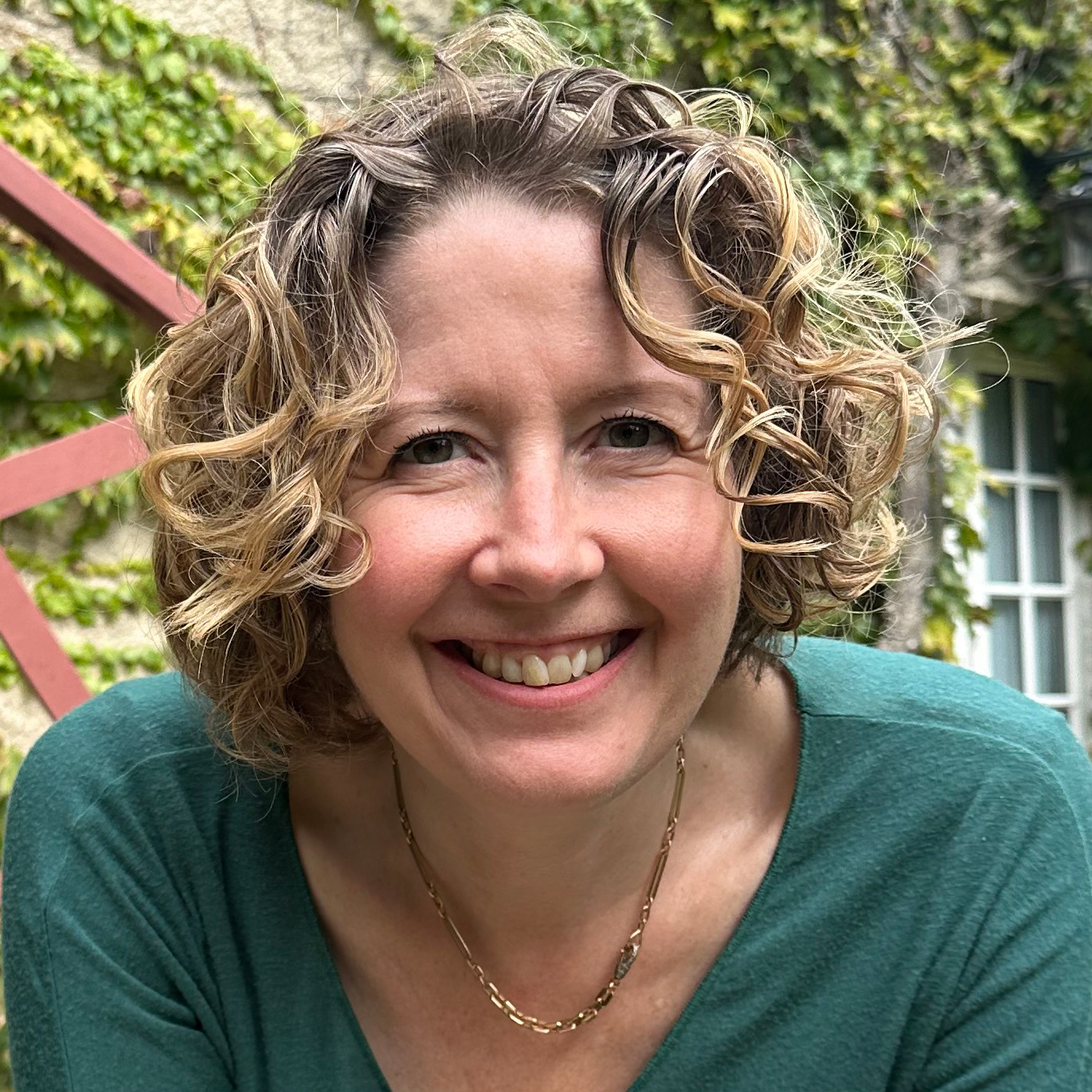
Staci K. Haines is a pioneer in the field of somatics, working at the intersection of trauma healing, embodied leadership, and social justice. With more than 25 years of experience, she teaches internationally and runs programs and teacher trainings that integrate somatic practice with social and climate justice movements. She is the author of The Politics of Trauma: Somatics, Healing, and Social Justice and Healing Sex: A Mind-Body Approach to Healing Sexual Trauma, both translated into multiple languages. Staci is the co-founder of generative somatics and founder of generationFIVE, and serves as a senior teacher at the Strozzi Institute, where she continues to advance methodologies linking personal transformation with collective liberation.
WEBSITE
https://theouterworkproject.org
https://generativesomatics.org
Upcoming Free Series on Embodied Agency with Staci Haines and others: https://theouterworkproject.org/the-world-is-calling/
Joel Monk
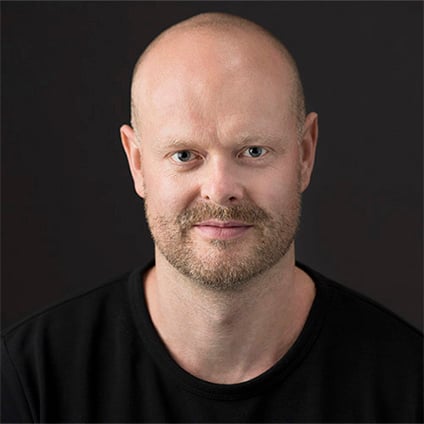
Joel Monk is a leadership coach, educator and entrepreneur. He co-founded Coaches Rising, a company on the cutting edge of online coach training with a community of over 65,000 coaches. Coaches Rising programs regularly include participants from every continent on the planet and they have collaborated with some of the leading minds in the field of human development and coaching. Joel is also a leadership coach, coaching at companies such as THNK, Booking.com, Siemens and Naspers. Joel has designed and led several entrepreneurial and leadership development programs, at places such as Socionext, THNK and The Impact Hub Amsterdam.