1X
Subscribe:

Just enter your details — and we’ll send you the latest insights right away.
06:00 Pragmatism and curiosity in the unfolding
09:00 A rising tide of integrative development
14:15 From cerebral to somatic
19:30 Vajrayana, presence and power
28:00 The primacy of the embodied experience
34:45 Meeting the client in their present moment
41:30 Vajrayana & the developmental approach
46:30 Bringing patterns into awareness
51:30 Welcoming the self
58:00 Facilitating a powerful conversation
1:09:30 Integrating lineages and models
1:15:30 Key skills for integrating approaches
1:24:00 Mutually transformative ways of being
Resources Mentioned:
Steve March
Dave Snowden
Jennifer Garvey Berger
Evolving self, byRobert Kegan
Joel Monk: [00:00:00] This is the coach's rising podcast. Welcome back. Today I'm joined by Charlie Awbery and Charlie is someone who's work had a real positive and powerful impact on me. Charlie is a guide for leaders at the limits of conventional thinking. They are a developmental coach and contemplative teacher and their practice integrates adult stage development theory with Vajrayana Buddhist. meditation. Charlie works with clients at the forefront of AI development and AI company founders, researchers at DeepMind and Anthropic and academics whose work is reshaping our understanding of mind and cognition. [00:01:01] So we're going to be exploring today what is Charlie doing with their clients?
Joel Monk: How does the Vajrayana view and developmental view influence their work? For me, the Vajrayana view has been very powerful because it has a different emphasis than what many of the views in the conceptual landscape. a spouse which can be more renunciate and transcendent. The Vajrayana view is really about being here. It's about ways of being. It's about working with the patterning of the moment and enjoying life, being fully engaged. And I think there's many parallels to coaching for me. So I've been really excited to get Charlie on the podcast for a long time.
Joel Monk: We'll explore today what is the Vajrayana view? We'll talk about practice, working with emotions, and what happens when Charlie enters what they call the real conversation with their clients? [00:02:00] A few more words about Charlie. Charlie co-founded evolving ground, a practice community exploring the integration of embodied awareness and psychological development with meaningful work and play. Their work is informed by and multi-disciplinary background and anthropology, economics and international development, and they are the author of opening awareness. It's a fantastic meditation guide, which points to a meditation practice, which fits with the Vajrayana view as opposed to maybe some more renunciate meditation practices.
Joel Monk: All right, I said a lot. Let's actually dive in right now. Here's the podcast with Charlie Awbery. I want to, I'm going to ask you how you are in a moment, but I actually want to express my gratitude first for your work. You're writing about, well, many things, I think. But one of the things is a Vajrayana view of Buddhism and, you know, you're writing really was impactful for me when I was coming through a very difficult transition out of [00:03:06] a more sutric view of spiritual practice and renunciate practice, which I think we're going to get into in more detail at points in our conversation today. But I really recommend people to read what you write because I think that information isn't necessarily so well-known or prevalent in the in a spiritual world.
Joel Monk: So thank you first of all for writing that.
Charlie Awbery: [00:03:31] Well, thank you, that means a lot to me to hear you say that Joel, I really appreciate you bringing that, yeah, because you know, the process of writing like you write something that feels really heartfelt or that is reflective of personal experience and there's a way in which you know, You just don't know in terms of the communication, how that's going to land, or where it's going to land, or what's going to happen with that. [00:04:08] Yeah, so it's lovely to hear you mention that, and to have feedback, and I'm glad. I'm really glad that when you had that experience yourself, and I remember talking with you a few years ago about Yeah, I've had all of that soul searching and that wandering and your journey. Yeah, that's good to know that you can have support, that you can have challenge that you can have writing from others who've been through that same process. Yeah. I'm glad.
Joel Monk: [00:04:54] Yeah, I think it points to an important topic, like I just mentioned, I think we'll get into more. How are you doing first of all as well, like? [00:05:02] Oh yeah.
Charlie Awbery: [00:05:03] Yeah. I'm really good. Thank you for the question. I'll share a little bit of my context to ground us here. I'm in London. usually I'm in America, but I landed in London four days ago, so my body has caught up with being hurtful through the skies. And so I look at my window and there's blue bells in the I love that.
Charlie Awbery: I love the blue bells in Britain and I love this area, lovely big old trees in this area of London that I've landed in. So yeah, I'm feeling very good. I feel kind of warmth in my heart, my central channel, spacious here with you. [00:06:09] How are you?
Joel Monk: [00:06:12] Yeah, I think there's a lot of excitement coming into this call because of the excitement I have for this kind of convergence of coaching and Yeah, at these days, I notice I feel really inspired, hello, it's kind of like a been a default setting and it seems kind of unreasonable in some ways considering what some folding in the world. But I find myself just often quite astonished by the world.
Charlie Awbery: [00:06:56] Me too. As soon as you become localized and connected and in conversation with people that that inspiration occurs, I find. [00:07:09] As soon as we get concrete and contextual to what is our shed interest and purpose here? What are we curious about? What are we bringing into being co-creating? And then there's less doomsdaying and more pragmatism and practical orientation to what we can actually do and create.
Joel Monk: [00:07:41] I think you're pointing actually to me to one of the key invitations, I feel that yeah, because you can feel overwhelmed if I watch the news and I see the enormity of everything unfolding. But you described that coming into connection with others and relating around our passion [00:08:03] what excites us and there's a sense of agency and grounding that can come online feels very very needed, you know. And actually I think maybe this segue into some of the things you're naming there, I think are why I liked how you wrote about vitriana practice, you know, that it is relational and it's contextual and because I think in the leadership industry and in spiritual circles, there's a tendency to maybe decontextualize a self, to atomize the, leader disconnect it from the system or the context. And I wonder if you could say, you know, before we get more detail, the into some of the ideas, could you tell us a little bit about the work you do, your coaching leaders, executives? And so, could you tell us a little bit about that?
Joel Monk: [00:09:01] And why, you know, Vajrayana, developmental psychology, You find so valuable in doing that kind of coaching with those people.
Charlie Awbery: [00:09:11] That's a great question. Think I want to start with my clients actually. They are, they are deeply, deeply, interested in the interesting human beings, they're very diverse.
Charlie Awbery: [00:09:45] They have families, they have children, they are full of emotional capacity and intelligence and competence, they're smart, [00:10:06] And I'm thinking about what is the connecting thread here between all of my clients and it is that curiosity and it's that they share a lifelong passion in understanding, perception, understanding, trying to understand. consciousness, the mind, what even is a mind or our embodied mind, what how do we relate with each other's and our experience? And so their engineers, their scientists, their some in finance, many exited startup founders, but for the most part academics and researchers who are at the heart of the unfolding relationship with AI, and they are also meditators. [00:11:10] they're not simply interested in the empirical or the computational or the linguistic movements of AI and how we relate to those. They're interested from their own phenomenological, from their subjective, experiential perspective.
Charlie Awbery: Their lifelong, long-term, meditative, some very advanced in their practice have been meditating for a decade. You know, I think sometimes there's this image of the very influential, successful, driven, unconscious, powerful person who is taking the world into a kind of doom's day, potential doom's day scenario. [00:12:15] my experience with people who are in those positions of responsibility and power and influences that they are deeply, deeply caring and concerned, they have children, they have families, they want the best from this extraordinary, extraordinary place that we've got to in the history where my conversations with them occur and the the emergence of what is happening in the coaching relationship there is I think it is this kind of this confluence of interest in what is happening psychologically emotionally and how that impacts one's work and and [00:13:15] How do we bring our understanding from sitting, from meditation, from various different frameworks, and scientific frameworks as well, and bring those together in conversation into a place of creating? and maybe modeling different futures or modeling what can happen in terms of behaviour or what can happen, what might happen socially or individually as we develop our relationships with AI. What's it even mean to have a human AI relationship or it's fascinating? Really it is.
Charlie Awbery: Yeah.
Joel Monk: [00:13:59] Yeah, it's interesting, because I knew you worked with people in that field, but I didn't expect our conversation to go here. [00:14:05] And the question that bubbles up is, and I've not thought about this, but it's one of the things we've talked about on the podcast is, what role do coaches play I don't know what the role is, is it propin a provocateur or, you know, stimulating people to think more deeply or widely about the impact and consequences of something like AI? I mean, Peter Hawkins said, you know what what coach is doing in the 2008 banking crisis and the jokers like they were all put in their invoices in quickly you know and he was kind of making a point of like well all these all these bankers were being coached and therefore you know what's the role of coaching if it didn't [00:15:10] But I wonder what comes up for you around that deep. It's great to hear you say that these people are actually very loving, conscientious people because they can be portrayed in the media, not like that.
Charlie Awbery: [00:15:22] It is not human. Exactly. Yeah. Right.
Joel Monk: [00:15:29] Yeah. So I don't know if there's a specific question in there, but I guess the question is about how you perceive your role in terms of, You know, is there a moral impulse to provoke and look at that wider perspective with clients?
Charlie Awbery: [00:15:50] I think that happens naturally. I mean, you can't be in that context or working in that context and not have those kinds of questions and concerns as well. [00:16:07] But, you know, just before we started our conversation, we were in that area of bringing everything into context and localizing and being like in the affordances of what do we actually have here now. And, often, my role, I find my role being to facilitate that, to come from not necessarily to ignore the abstract or the general, but to move to facilitate the movement from the abstract from very much a kind of mental model into what will happen in a minute.
Charlie Awbery: [00:17:00] When you say that, what's happening?
Charlie Awbery: [00:17:05] What's happening in your body? If we come into presence here together, if we come into the context, what matters about that and notice what's happening as we slow down in this conversation. So a lot of my work starts. And I think my role is in the beginning to facilitate coming right into the embodied real time in the immediate visceral experience of being together. And the more that becomes possible, the more that my clients take that into their lives, into their work situations, into their team contexts, and they're able to be present like really be present with what is impacting the choices and the decisions and the the next steps in creating models.
Joel Monk: [00:18:19] Yeah, this is where I think the, maybe the question of Vajrayana and developmental psychology comes in for me because I feel like in our times, probably this is always a very relevant and potent practice, but it seems like with the perturbance of the world, there's more need, or maybe it's just louder for people that there's, you know, the conditions are kind of very active and it's inviting Um, could you say something here about, because this is why I think, if I actually want to, if I say what I think, and then it's working with the energy of the context we find ourselves in. [00:19:11] And what I liked about what you wrote when I found you is that, you know, there's a renunciate path of spirituality, which can kind of focus a lot on no self. And then, but Vajrayana has a different focus, which is, you know, it kind of points to more like our relationality to experience and, and I even saw using this phrase, ways of being. And I was like, wow, that's like in, you know, our kind of coaching field ways of being, like, ontological. Territory, like, so, you know, could you say why you, what vitriana is and we can even start tying it to mental psychology and a bit and how you feel it's relevant for this work, you just described with your kinds of presence. Yeah.
Charlie Awbery: [00:19:56] Let's do that. Maybe let's, [00:20:00] I'm just thinking, you know, we're here with our listener, our listeners, and it may be a new word of Vajrayana. It's one of those kind of buddhisty jargony words, isn't it?
Charlie Awbery: [00:20:13] So, it's a good way to introduce
Charlie Awbery: [00:20:24] How about we start, how about I could just say some words, and I'm going to invite you and our listener to, as I'm saying these words, maybe just, you know, center. take a deep breath, and just see you, I notice and experience what happens in your body when I say these words.
Charlie Awbery: [00:21:03] I don't want it. Get rid of it. This is not me. put it over there. Distance. Get away from it. I don't like. I don't want you.
Charlie Awbery: I'm going to introduce some more words, some more to stay with what happens, like inside your skin. [00:22:00] Connection, engagement, being with, feelings, feelings, emotions, stepping towards spacious connection, being in this worth. There is no escape. This is it. Here we are. What can come out of this?
Charlie Awbery: What can come from this? Who are we? How is this here? [00:23:03] Not there here.
Charlie Awbery: [00:23:20] fabricated. This, you know, obviously I was leaning right into the end, the range of renunciative practice that is very much or has been historically very much about getting somewhere else, getting away from this world, finding something different by renouncing. So very much a dualist path. And that is what we might refer to as the the most word I'm looking for like the the most hardcore renunciative [00:24:11] Tradition will have that kind of attitude and it's an attitude. It's a resistance. It's like you can feel the texture of that resistance towards whatever it is, towards and getting up in the morning.
Charlie Awbery: If you're in that experience, resisting, moving away, then you could You could understand that as being in a renunciative frame. Now there's a positive relationship with renunciation as well, which is the positive aspect of being able to untangle, being able to separate, really important, [00:25:05] to no difference, to have space, to be able to see clearly. So to cultivate or to find the possibility for space in relationship and difference. So, you know, renunciation has both, has a whole range, a whole nuanced range of possibility. Vajrayana, so Vajrayana, the path of the vajra, indestructible, capacity competence, activity in the world, effective, and that's in the world.
Charlie Awbery: [00:26:02] So it's very much in and off of this world. It has a world of orientation, a very pragmatic, orientation. It is not about rejecting. It's about transforming through connection and like you said earlier Joel, everything in the Vajrayana is oriented towards interaction, towards relationship, towards connecting and ultimately in the path of tantra which is much of what Vajrayana is in the path of Buddhist tantra. It is the the inseparable ability of compassion and wisdom that is your landing point. If you like your your your result
Charlie Awbery: [00:27:00] the experience that comes from the transformative process, and there's a lot more in Vajrayana as well that maybe we could come to later, but just by way of that contrast that you brought between sutra and tantra, there's, I'm going to say, there's a relationship There's a relationship between them that becomes really important, that is, about coming into presence and spaciousness, like finding confidence in the not-known, the unknown, the spaciousness of our, possibility, you know, the spaciousness of being here in a body different from others. [00:28:05] And that's kind of the starting point.
Joel Monk: [00:28:12] There's many things bubbling up, like, I just wonder what you think about this. We've talked on the podcast about this shift from a self-improvement paradigm to, you know, an unfolding paradigm. a poetic attune when it feels very resonant with what you're talking about, particularly Like in the self-improvement, which can have its place, if you're learning to learn a skill like a language, but when it comes to working with the self-incontext can perpetuate a sense that there's something missing, because it starts with a premise that, I'm not okay, where I am, but where I over there in the future, if I can get to that place, then I'll be okay. And I think a lot of coaching, [00:29:00] It can be based in that paradigm and it doesn't negate that we have desires and dreams and things. But it's kind of working, there's some folding paradigm and I'm credit to Steve March influenced me a lot here. It's working much more with what's here now, the presence of what's here, working with embodied experience.
Joel Monk: I think again coming back to what I said where a lot of what I inherited around coaching and leadership was this kind of like atomized, if you have a leader, you know, separate from everything like individual, but seems now that there's also a movement in coaching where it's like we're coaching the relationship between things. as being at least is important than the things themselves. If not more primary, you know? And so, yeah, I wonder if that feels like they resonate with the view you're talking about.
Charlie Awbery: [00:30:02] certainly does, yeah, and the coaching relationship itself as being the vehicle through which transformation occurs, and that's very much coming from a Vajrayana traditional Vajrayana paradigm and yet changing the nature of the roles. So having the relationship still be where the transformation happens and how the transformation happens and yet there is less rigidity, less fixity in terms of the absolute nature of the roles. There's much more possibility for fluidity there. You know, as you were talking about the progressive success oriented drive towards this all always future perfect state of being. [00:31:02] I was making a connection between the the Buddhist approaches and I don't want to simply keep those beings too straight. There's a lot of that in Tantra as well and in Vajrayana.
Charlie Awbery: It still still comes up. It's much more much more to do with different lineages or paths that have that kind of forward leaning approach. And we have that in our business training and our strategy and our leadership training as well. I think the way that I have way that I've come to understand the relationship between those two attitudes, because they seem to be incompossible, don't they? They seem to be like, you cannot have this and this at the same [00:32:13] What I feel happens differently is that once somebody is fully present and able to be in their body,
Charlie Awbery: and a lot of the work is to begin with is finding what that experience is like because it's fricking revelatory sometimes. I mean it can be all kinds of things. It could be explosive. It can be absolutely extraordinary. Like your body coming alive over a period of six months a year, a couple of the years, when you've lived in your head. the entirety of your life, like actually experiencing that, oh, there is, there is a responsiveness here, there's a signal, there's data that I haven't even been in connection with when that happens. [00:33:17] Something changes about the way that it, the way that we hold goals. the way that we create projects and do stuff in the world and the way that the way that we have effect, the way that we're efficient or make things build things, something utterly, totally changes.
Charlie Awbery: and willingness to pivot, to change, to move with what is emerging, to bring in new things, to be in that co-creative process. [00:34:09] not saying that there isn't a goal, but that it's held so much more loosely. It's not the mapping and the guiding feature. It's more like the facilitates direction. That's a very, very different experience than being driven to an external map. Is that making sense?
Joel Monk: [00:34:45] It does totally, I think, this is where, like, Complexity theory as well, you know, we've had people like Dave Snowden on the podcast to, you know, he's a very kind of country-arian voice, but I've learned a lot from him, you know, because I didn't really like what he was saying when I first met him So that, you know, people like that I always want to listen to them more [00:35:10] But it sounds like when you're talking in this way, there's like the goal is something a place to live from, in a sense, like it creates a sense of direction, but you're not falling into some of those traps, that you can get where you have kind of limited narrowing of her view and you exclude love other possibilities or perception of phenomena. So there's a kind of more openness and easefulness or generativity with that goal.
Charlie Awbery: [00:35:43] I want to bring an example, actually I'm thinking of an example that is a very, very recent in my coaching, and actually it's a slightly unusual example too, because very often in my coaching practice, there's where we end is a very specific method [00:36:07] geared to that person's context and relationships and experience that they can take and experiment with, very often those are coming from Patreon, not always, sometimes from other other traditions, did that a mental or a Gestalt or whatever, but this example that I was thinking of, it was a, I'd love the conversation that I have with my clients. I mean, I just they light me up seriously. I just feel very often I'll finish a call and we'll both be like what could be possible for them in their lives? And I've finished a call very recently and we've been talking about how the nature of the problem that scientists and particularly computer scientists are working with now is changing, like the type, the nature of the problem, and I'm putting [00:37:24] for decades now.
Charlie Awbery: There's been a very particular sort of functional issue that scientists have been grappling with. A lot of that is now sorted in some way by AI and yet a new meta kind of problem facilitating an AI to be able to an agent, to be able to, I, when it gets to a particular point of stuckness or looping, and to do that in a way that is very context dependent and relevant to the work of the researcher. [00:38:15] So we were having this conversation was so interesting. And by the end of the conversation, I suggested or invited a paper, like, I would love to read about that, about that whole process and how you might discover and make that possible for other people. And so something like that came from the conversation and I've been going on enough that I've forgotten where we started with that.
Joel Monk: [00:38:50] What role in the conversation is like passion and because, you know, it sounds like through that conversation, you know, you both came to this kind of sense of, wow, like we could create this, you know, what if we had this in relationship to this challenge, you know, so is it that you're orienting around like creativity and passion and what might want to happen
Charlie Awbery: [00:39:20] very often, yeah, very often it is, but I think that comes out of the initial work which is the relational, the often the developmental work as well. Like there's, um, there's a very common, I think it would be called declarative lag in the, um, in the developmental psychological world, for scientists and engineers being in a systemic or meta-systematic relationship with their work or with the world cognitively in their conceptual capacity is easy. [00:40:07] That's the world that that they live in. And emotionally there's a lag or a lack of familiarity in being able to relate from that experience, the emotional experience, the embodied experience, and to be able to do that connection and separateness with seeing old patterns and finding something new and different. A lot of the work that I do with my community of practice is in that area of seeing our patterns of interaction and coming to
Charlie Awbery: really be quite familiar with them, not as habituated loops, but as possibilities for change and transformation.
Joel Monk: [00:41:12] I love this great, you go here, because this is a place I wanted to speak to you about. Because, could you say more about how you see working with those patterns? Because I think, you know, when I think of transformational coaching or developmental coaching, it, you know, this is one of the key areas is like where we start to notice, you know, what we're subject to, that it can become an object in our awareness or We start to see these patterns and I wonder how that works for you and and the role of emotions in that in terms of also, you know, you've got one view which is quite common, which is like maybe a more therapeutic You know, if you are like, there's an integration that can take place, you know, when one begins to relate to one's emotions and the patterning, you know, it can begin to relax and open up and it goes away. [00:42:11] And then maybe, you know, I don't know how you see this, but sometimes if I draw you on and maybe it's like it's not taking a healing view is it is it just working with it as an energy.
Charlie Awbery: [00:42:22] Anyway, could you just, yeah, maybe I said enough there. Yeah, and Vajrayana would not many people understand and work in Vajrayana with a healing modality. So that is coming much more from psychological perspective and merging the two. It doesn't have to be that there is a healing modality, very often there is a weakening perspective or a awareness, like finding awareness in habitual patterns, and that comes into Vajrayana as much as it does to psychology, but the often the end point is [00:43:15] described as different. I feel like I'm getting a little bit theoretical here. I want to bring it back to practice.
Charlie Awbery: [00:43:32] As children, we create these extraordinary ways of being that are
Charlie Awbery: [00:43:46] They're kind of inherited, they're inherited, they're the way that we survive in the world. They're kind of beautiful, safe, reassuring familiar, [00:44:08] And a lot of the work I feel, a lot of the connection between what we do with spiritual methodology or what we bring to coaching from developmental experience, training is in being able to actually experience ourselves doing that thing.
Charlie Awbery: [00:44:36] I'm seeing that, I mean, seeing in the bodice sense, like experiencing that up, I'm doing that thing again, having some compassion towards that, some self-love, and recognition, it's not that those patterns are bad.
Charlie Awbery: [00:45:04] they're not, you know, they have kept us alive, so there's, there's some sense in which we can really experience the, um, like being on our edge at our, our, uh, like Jennifer Garvey Berger would say the growth edge of our experience, being, being in that with another being, that can be utterly transformative. Yeah, so I think the connection between the Vajrayana approach and the developmental approach is in how are we with these patterns? How do we find them and stay with them despite the discomfort [00:46:01] find space enough that we can change and change.
Joel Monk: [00:46:10] Yeah. It seems like when you're with your clients, you said, they're embodied experiences and important doorway into those patterns. So I'm imagining you help them to kind of sense what arises in relationship to the topic they bring in. And that's a key part of it.
Charlie Awbery: [00:46:29] it is and it's, um, I might, energetically, might say that it is to do with how those patterns resonate in the subtle body. So that sounds like a bit of a jargony phrase. I'll unpack that a little bit so that it's more understood in the felt sense. So I In the psychological approach, we understand these patterns. We understand them through communication. [00:47:01] Like, for example, I experienced threat as a child. I experienced the world as big as overwhelming.
Charlie Awbery: So therefore, I have to armor myself, protect myself, and I can put those patterns into, like, I can describe them with words, and that's incredibly valuable. It's in the realm of interpretation, and understanding our patterns through interpretation can be really, really useful. what those patterns are like as knots, governments, swirl knots in the body, like literally in my heart, in my solarplexer. [00:48:04] Like if I'm able to slow and find presence enough with what is happening underneath all of that interactive pool push and hooking and prodding and all of that. If I can find what is happening really quite deeply inside of my then it's possible to change the experience of those from the inside out and
Charlie Awbery: have literally have experiences of untangling that then affect the way that I am in communication in a quite extraordinary way. [00:49:04] Like I can I can see how some experience that is a pattern was held in my body. And as that loosens out also the way that I relate with you and with others, begins to have more possibilities. There's more in the possibility space there. So there's this connection between how we hold our communication and how we understand it and interpret it as well.
Joel Monk: [00:49:48] Yeah, I get, like this is where I get really excited because I think this to me is like so potent, you know, when we start to work on this level that you're describing because it's very practical and yet subtle and it's like honoring that these patterns are even doorways or, you know, invitations to, you know, to bring into awareness in the way you're describing and [00:50:16] I've had experiences where just including embracing some kind of not or contraction without a goal, you know, this is a tricky part without a goal to get somewhere to, you know, but it's kind of like opened into, you know, a feeling of great kind of spaciousness and well-being and You know, that that then kind of lasts and, you know, I think I wonder how you see this that, you know, as AI comes in more, I think one of the questions everyone's asking amongst the many we're asking is like, well, who are we really as human beings, you know, we've got these AI entities and there's a kind of [00:51:09] They do this stuff and we kind of we call them intelligent and they are in many ways and and yet we're a very different and and I think therefore a lot of coaches are now being invited to ask all what is the work of coaching that AI won't won't take at least not that I see, you know, in the kind of next few years. And I think it's this realm of of subtle work, kind of like the liberation of energy and in service of agency, of so in service of expression and aliveness.
Charlie Awbery: [00:51:50] Do what that brings up for you
Charlie Awbery: [00:51:58] like a moment, a moment of presence between two beings in the world.
Joel Monk: [00:52:09] I mean, I feel that I'm out as you name that, and there's just a sense of joy. You know, that comes in there, and an intimacy, and a goodness.
Joel Monk: [00:52:22] Right.
Unknown: [00:52:23] Yeah.
Charlie Awbery: [00:52:24] And I wanted to ask you as well, like we're talking about the experience in the body. the actual visceral, the experience of sensation moving, moving through our heart, our sort of plexus, our gut into our throat, all the way through, into our pelvis, our head, everywhere, you know, we feel sensation moving in and around the body. and we were talking about interpretation and patterns and you brought your experience. [00:53:04] I was just really curious whether you had noticed a difference in your relationship as well and in your interactions as a result of those two coming together.
Joel Monk: [00:53:29] I mean, it's kind of difficult to know where to start really in terms of there's just like the love I feel for my family, you know, the simple love and joy, like the kind of radiance of my family is just like exquisite, you know, and I think in some ways, It's the inverse of what motivated my spiritual practice in the early days, which I just felt scared and unsafe. [00:54:00] And I wanted to understandably solve that or get away from it. But the shift in my practice was what actually allowed for the real sense of intimacy and groundedness and openness that I was looking for. So yeah, there's like, There's more freedom of expression, like less. It's like paradoxically caring more or feeling more but caring less and feeling more light-hearted. And I think this is, yeah, another word, which has become really important to me.
Joel Monk: And I remember you speaking about this, but enjoyment. You know, like enjoyment, like the inherent, like irreducible enjoyment of being with others in life and doing good things. You know, it's like, like what great. So I remember saying to you, I love being me. [00:55:02] I love being me and you were like fantastic. You just smile to them because, you know, that wasn't. I was wrestling with all of that, you know, with a lot of the sutric stuff, it's like, you know, you don't exist and this is the last thing I'll say, but I remember his name is going to escape me now. I'm quoting him quite a lot because he was a non-dual teacher who rejected the more transcendent non-dual because he was he said, like, what I tell my daughter, you don't exist.
Joel Monk: would I tell my, my, you know, five year old daughter you don't exist or, you know, thoughts. So, thoughts and or an illusion, I wouldn't. So why would I tell myself that, you know?
Charlie Awbery: [00:55:46] Yeah, yeah. Yeah, the, um, the self, is incredibly welcome in tantra.
Charlie Awbery: [00:55:56] I am incredibly important. [00:56:01] We need and invite selves and selving in order to get stuff done in the world. There's this orientation towards Yeah, fluidity, fluidity of being, and the self is not problematized at all, really. It's, it's rigidity and fixing of identity that can be problematic, I think. So having more, more of a range and a nuanced understanding of what it even means to to be so thing in the world is more, I think is more, more, way we're at in our practice. And you said about enjoyment, all of the emotions are so welcome.
Charlie Awbery: [00:57:03] It's the relationship with and how we relate with our emotional texture of being that is important and including the discomfort. the only way fully to experience the opening, the joy and the opening in the heart, center is through being with all of the discomfort or the differences, the knots that have been formed by that habitual and yet creative way of being in the world. So enjoyment, yeah, is really important in my coaching, in our practice, yeah, meditating, like meditating can be enjoying, enjoyable, for sure.
Charlie Awbery: [00:58:09] So something you just said, I bring up a question.
Joel Monk: [00:58:11] Do you help your clients to land in new ways of being that they then experiment with? Is that something you might do? Is that is it more just liberating so spontaneous ways of being can arise or might you kind of practice particular flavors?
Charlie Awbery: [00:58:35] You know, there's there are different paradigms for coaching and what what we do, how we are as coaches and I feel like what happens is that Emergence from the coaching conversation is where the fruits come about and it can take a lot of practice. [00:59:08] myself and with with a client to get to the point where we're actually in conversation, like a conversation. What is a conversation it is? It is a shared presence. It's a shared interactive presence of awareness such that we're confident enough in not knowing what is going to come about from this. We're relaxed enough in our being. that we can just, ah, we can land, be together here, and then see what is there, what is really matter in the moment, and then from that place.
Charlie Awbery: [01:00:15] come into some kind of exploration of what is needed in this difficult situation, this difficult relational situation that is being brought into the conversation. Let's explore, let's simulate, that experience here in the coaching relationship and let's see what arises from that and let's do that with awareness and with presence such that something is going to present itself as a possibility for [01:01:02] practice. Very often that's where we end up. It's a possibility for practice. I want to make this concrete and bring an example. So, you know, so simple.
Charlie Awbery: [01:01:16] Often it's very, very simple. Like,
Charlie Awbery: [01:01:28] How about every time I notice that I'm feeling this like anxiety and this sort of busy thing here in my chest, I stop speaking.
Charlie Awbery: [01:01:49] How about that as a practice? What does it like to stop speaking? Just like that? really simple, simple practices that come out from conversation.
Joel Monk: [01:02:09] The sense of that you're interrupting that habit or that pattern, and then seeing what happens as you do that.
Charlie Awbery: [01:02:19] Trying something different. Yeah.
Charlie Awbery: [01:02:24] And there are literally hundreds, possibly thousands of very personal prompts or practices for interaction, for relation that come out from conversation.
Joel Monk: [01:02:45] love how you describe that the transformation is in the conversation itself, you know, that's the territory and the practice, and what I want to ask you about those practices you named, and I use that there's hundreds, and so we would love to get a sense of them, but [01:03:07] Well, you already said this in a way, like that you're, you know, something meaning for arises and then I kind of response to the challenge that someone could practice, like, I don't know if this is a question you can even answer really, but what are you tracking moment to moment in the conversation as you're in dialogue? I mean, I guess that could be many, many things, but yeah, how do you know you're on the in the unknown, you know, what guides you?
Charlie Awbery: [01:03:43] I don't know. Joe, honestly, you know, there's like, you know when it's there, you know what I mean?
Charlie Awbery: [01:03:56] It's like that there's a mutual, [01:04:02] pair and interest and engagement, such that we're both involved, really involved in the content and able to be present and stand back and wait for the question to arrive.
Charlie Awbery: [01:04:37] Sometimes it's just utterly, utterly extraordinary, the sense of the word that comes to mind is revelation.
Charlie Awbery: [01:05:03] and I feel a little cautious in using that word because it has so many historical and connotations or means different things to different people, but you know there's sometimes a moment with being able to drop into that sense of being right here.
Charlie Awbery: [01:05:27] There's a moment of Oh, that's what has been holding me. That's what's been gripping me here in this experience.
Joel Monk: [01:05:51] Yeah, you find I can relate to what you're sharing very much. And sometimes it's like you just drop into a kind of [01:06:02] almost like a flow state where the conversation is unfolding at the pace of itself, you know, and insight, revelation is very kind of available. And you're inside the livingness of the conversation itself, and that itself is transformative. It's not that you need to, I mean, But it's like, like you said, that the transformation is unfolding here right now in conversation.
Charlie Awbery: [01:06:40] I think it happens through questions, actually.
Charlie Awbery: [01:06:47] Yeah, it's the nature of the questions. The, um, there's an integrity. There's a care, and then the question is arise from that conversation. [01:07:06] You know, I feel like a conversation isn't a conversation unless it's possible that something can emerge that wasn't known before. And then as you, you know, with a client over time, there becomes this kind of richness, this tapestry of shared context and conversations. Have a client, my very first client in a coaching context, Sasha, and Sasha has been writing on sub-stacks, so he's public about his practice as well. And, you know, we have been with been in conversation now for, well, six years. [01:08:04] I'm a pretty much a weekly basis.
Charlie Awbery: I'm aware that for many coaches there'd be a sort of a response that might be a... Shouldn't we have a container, a short container with goals and, and yeah, maybe sometimes, but the depth and the richness and the the growth that has occurred from that continued and by the learning in that, you know, I have the facilitatory role and when we started out with very much a mentor, you know, meditation coach and a Vajrayana bringing the Vajrayana perspective and, you know, very different roles than the roles that we have now through, [01:09:19] something shifts and becomes possible such that the the nature of the relationship now has exploded out of the coaching container and that's fine. That's fine where we're in conversation and there's a very natural result here. now. There's a mutuality and shared respect that has come from the coaching is now becoming available for others through podcasts and through recorded conversations that we've had.
Joel Monk: [01:10:07] And it's a question really, but I kind of hear you saying it, which is that, okay, the coaching, client role structure has its certain value and place. But there's also this place where you break free from that. And maybe there's a mutual inquiry. And I think that's actually taken, there's a mutual transformation inside of a coach client relationship too, but maybe that even beyond that, there's even more liberated. developmental friendship or maybe friendships, not the right word, but it's like a you know, trans transformational connection.
Charlie Awbery: [01:10:49] And right. Yeah, there's a mutuality there. And I think you can't force that as well. It just occurs naturally over time. And yeah.
Charlie Awbery: [01:11:03] I love to.
Joel Monk: [01:11:05] to this up, and it may be, we do a part two, but you know, we haven't taught, we've named developmental, the developmental perspective. But could you say, how that kind of complimented the Vajrayana view for you. Like it seems, I get the sense for you. They fit together well and the two of enhance the work you do. Yeah, I do think so.
Charlie Awbery: [01:11:32] Yeah, I do think so. Like, you know, personally leaving traditional Vajrayana was a developmental move myself. I relate that. to being a part of my own developmental change and transformation, and it was not, it wasn't easy to leave that context, to leave the security of the, you know, the many years in that place, but, [01:12:09] through the process itself and through coming to understand that process and then taking that into my own coach training in the key-gun systems and adult development psychology, change, you know, change in the situation itself. That's, I think, you know, that, I know what I'm saying exactly, but that came to, that came to be very important in terms of my exploring with my clients, what is happening for them in their relationships and their processes as well. [01:13:01] Is there a question in there?
Joel Monk: [01:13:03] Yeah, I'm guessing, in this maybe take a little unpacking for a few of the listeners in terms of what developmental psychology is, and I think many, many know it, we've had Robert Keegan on the podcast and others in the field, but are you saying that You know, to use these technical terms like was it like there was a socialization within the the lineage and it kind of allowed you to Even move into like a kind of post you know systemic post systemic view of like Yeah, how do we, how do I relate to this through my own world?
Charlie Awbery: [01:13:49] Yeah, exactly that, the lineage experience, the context that was the world that I swam in, became object, that became through my separation from that, that became [01:14:02] and that for me was quite a socialised context and the cognitive dissonance in that was the the agency, the self-authorship, and as I moved more into my own, agency from that context, with appreciation, but also with resistance to and, you know, the felt sense of personal need to move into a more fluid wider context. So that process occurring became of interest to me in terms of like, what even is that? What's what's happening? Now, when I read Robert Keegan's evolving self, but that had a huge, huge influence on me. Like, I could see my own process in that, like, oh, just it brought a framework that helped me
Charlie Awbery: [01:15:09] my own process into, yeah, into agency, and into being an organized system myself and then moving beyond.
Joel Monk: [01:15:19] And about, you know, self-transforming form of mind and Vajrayana, it seems like there could be some complements there, but I just want to throw something in and which is kind of connects to what we talked about earlier where I, I, I, I, I, I kind of, imbibed developmental theory and it kind of in some sense like propagated a, you know, a separate sense of self, like it was disconnected, you know. And, and so I open to the idea of, and I'm playing with this, I'm not sure if it's true or not. [01:16:04] I mean, maybe it doesn't matter and maybe it's more interesting if it's useful, through people like Dave Snowden who've challenged developmental models in a way that have enriched my learning of them. Is it, by context, what comes first? Like, is it my form of mind, which constructs the world? Or is there a equal force of the context of the world brings about the arising of a certain maturity of self?
Joel Monk: I've been in spaces like, for example, my family life sometimes I can find myself reacting, contracting. And then in certain collective spaces, I've noticed it's like the when it works well, it's like the whole group kind of starts to access very meta cognitive embodied, you know, not just like self transforming kind of space, where we're all mutually, you know, co, co arising and and still individual, but, you know, self transforming that's a very good word for it like. [01:17:23] And so yeah, I don't know if that question makes sense like an even it's even if it's of interest to you, but it's been of an interest to me.
Charlie Awbery: [01:17:30] Yeah, the context or the form of mind, and I feel like the context is going to. not sure I like the word trigger, exactly, but there's a context gives rise to certain patterns and if we're in a particularly, if I'm in a particularly challenging for me context that, you know, really kind of, [01:18:02] calls me from friends or from awareness into an old pattern. Then I could, I, and that happens. And then I am in that context more in what in the growth edge. coaching would be called your trailing edge. You know, we have a center of gravity and then we have a growth edge and we have a trailing edge. I feel like, you know, in many different contexts, there are, let's take the Vajrayana context.
Charlie Awbery: You could be, people could be in the same context place with regards to their form of mind or their way that that context plays itself out. And at the same time it tends to be that we have these [01:19:01] kind of a tractor groupings where it tends to be that the norm in that group context is going to be one of a particular kind, a particular sort of interaction and the norm in another group context will be somewhat different. I've put a lot of a lot of thought and and creativity with people in evolving ground in the community into this question that we've been sitting in. How do we know that we can create or how do we know that we are creating interactive group dynamics that are mutually growthful and transformative and that are providing a vehicle for anybody who comes into that context to have the space and both the support and the challenge that we meet then wherever we meet.
Charlie Awbery: [01:20:15] our community members wherever we're at and to the extent that they want change and transformation and movement into another form of mind that that is possible. So there's a lot of interrelation between the developmental models and
Joel Monk: [01:20:43] What is important for that? Do you think, I mean, it's probably a nuanced answer, but what do you find are the conditions that are supportive for that mutual transformation?
Charlie Awbery: [01:20:58] Skillful disagreement is one. [01:21:02] really important to be able to disagree and learn how to disagree, skillfully and confidently and in a way that isn't necessarily aggressive or or rebellious or, you know, it's just simply a skillful disagreement. It's okay to be different and to have different perspectives and to explore that as interesting. And it could be frictures. That's okay. Yeah, it could be a lot of tension there. That's that's fine.
Charlie Awbery: So welcoming conflict, very definitely is part of that growth process. in my self as a human being that it is possible to live in a world where there is not conflict, as soon as we have difference, then the potential for conflict is there, and we love [01:22:12] curious skepticism, like, you know, both parts of that are so, so important, curiosity. is the openness aspect, it's the spacious aspect, it's the connected remaining in connection. And then the skepticism is not just taking things for granted, but actually wondering and exploring and challenging and being and not knowing, being totally okay, learning how to be okay, noticing, noticing doubt, noticing when in a group context, when there's, you know, maybe some kind of energetic, [01:23:11] pressure, social pressure, like I feel that in my body. I feel the pressure to be a certain way or conform, a certain way.
Charlie Awbery: Like noticing what is that like when, when? occurs in my body as the sight of pressure from outside, external demand to make myself a certain way, according to what is happening out there. So there's a very different from fluid, fluid interaction that occurs in awareness, I think.
Charlie Awbery: [01:24:02] Well, it strikes me that that would keep a group.
Joel Monk: [01:24:09] How can I put it like it would stop it becoming kind of to, I don't know, the same, sameness doesn't kind of coagulate. even, you know, become cult like where it's like, you know, not in the, not in the strong sense of the word, but like, you know, we're all now socialized into this is who we are and that can be nice, maybe, but it's not necessarily a mutually transformative space then it's like, yeah, it's become, you know, formed around a particular set of a particular set of beliefs or ways of being so. Right.
Charlie Awbery: [01:24:45] Right. And the norms of interaction are where that happens, I think. If you go into any group at all and you simply notice what are the conventions of communication here, what's actually happening and repeating itself in the patterns.
Charlie Awbery: [01:25:15] I'm aware of our time as well. Yeah.
Charlie Awbery: [01:25:20] Yeah, thank you for pointing to that.
Joel Monk: [01:25:23] Do you have another minute or do you have our thoughts on that? Yeah. I mean, I feel like there's a lot we could say about what you just shared. But I wouldn't, you know, I do want to ask you where we can find out more about your work. But I wouldn't do, if there's anything you want to share, just enclosing that, yeah, no need to, but there's anything here.
Charlie Awbery: [01:25:49] I was in preparation for having a conversation with you, Joe, I was just bored by the, [01:26:00] The resource that you've created here in this podcast, the 100. I mean, you have hundreds of conversations. What a gift. I mean, that is wonderful. So I want to appreciate the work, the joy that you've brought here, all of these resource that you've created. And in that struck me how, you know, the consistency of doing this, of being here for this again and again and again and just, you know, the keeping it going that in itself is what makes a big difference like the continuity of what you have here.
Charlie Awbery: So, yeah, massive appreciation for all of those conversations. [01:27:00] for all that, all that you're doing here with coaches rising, yeah.
Joel Monk: [01:27:04] Thank you. Yeah, it's been a transformative practice, actually, yeah, to be in conversation with amazing people, but also to take on the perspectives, you know, and and follow my curiosity. There's many of the, the things you've discussed, that actually you've been you know part of doing this so. I mean, hey Charlie, I just really enjoy being with you and I just want to say that I'm struck by how you've embodied in our conversation many of the things you're talking about, you know, like related nurse and curiosity, spontaneity, that sense of being in the conversation, you know, like, as you, that's that's it. That's what it felt like, to me. It's like, we're in the conversation, the real conversation.
Joel Monk: So thank you. And yeah, where can we find out more about your work, instead? Sure.
Charlie Awbery: [01:27:59] Yeah, spaciousclarity.com. [01:28:03] That is the place that I'll be. So we're putting courses out there. There'll be opportunity for people to be the first to test out the opening awareness course there. It'll be fun. And yeah, there'll be things you can sign up for. So spaciousclarity.com.
Joel Monk: [01:28:28] Here we are, we're at the end of the podcast. Just have a heads up again. If you're not on our mailing list and you want to stay in the loop about other things we create, then head to coachesrising.com. Put your name in the sign-up box there. You'll also find some of our other offerings or online trainings for coaches there. And just want to end by wishing you well, and I'll see you again next time.
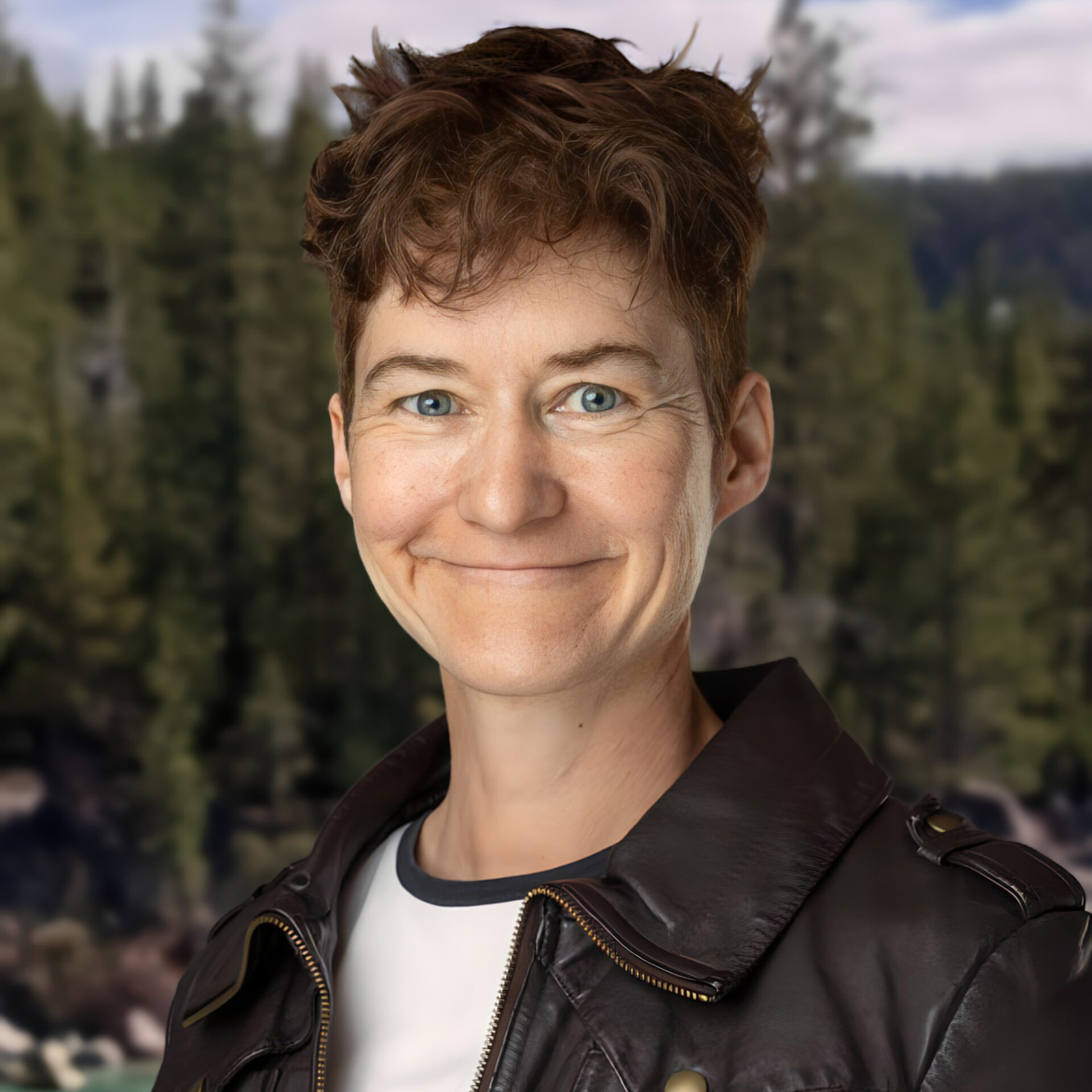
Charlie Awbery
Charlie Awbery is a CEO, program director, and mentor to founders. They bring a strong entrepreneurial background with deep experience implementing financial and organisational systems for new ventures. A self-taught developer skilled in Python, Scheme, SQL, and web technologies, they combine technical fluency with strategic leadership. Charlie holds an MSc from the London School of Economics, where they received the 2009 Fei Xiaotong Award for research on economic R&D and technology policy in China and India, and an MA with first-class honours from SOAS, University of London, specialising in diplomatic studies and development economics. They are also the founder and coordinator of Mind Works, a supported employment initiative in partnership with Cardiff Mind, supporting mental health service users in Wales.
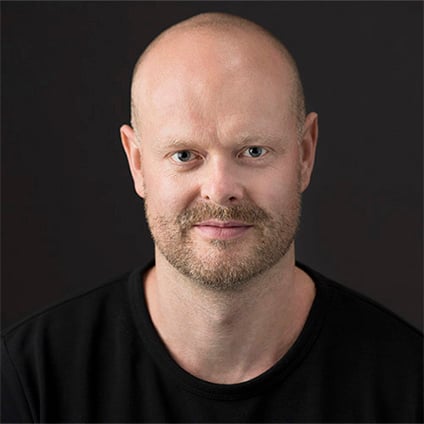
Joel Monk
Joel Monk is a leadership coach, educator and entrepreneur. He co-founded Coaches Rising, a company on the cutting edge of online coach training with a community of over 65,000 coaches. Coaches Rising programs regularly include participants from every continent on the planet and they have collaborated with some of the leading minds in the field of human development and coaching. Joel is also a leadership coach, coaching at companies such as THNK, Booking.com, Siemens and Naspers. Joel has designed and led several entrepreneurial and leadership development programs, at places such as Socionext, THNK and The Impact Hub Amsterdam.