1X
Subscribe:

Just enter your details — and we’ll send you the latest insights right away.
In a world that is getting constantly crazier and less predictable we are beginning to realise that who we are being is more important that what we know. The world is changing too fast for anyone to keep up, so the crucial attributes of leaders today are found in their way of being, rather than in their wealth of knowledge.
Faced with today’s cultural and economic culture, leaders need to be calm in the face of uncertainty, handle the anxiety of their teams and organisations, make decisions that honour the big picture, and foster a collaborative mindset. These abilities are developmental skills, rather than things that can be taught.
In a large organisation you can’t scale your knowledge indefinitely – you have to be able to impress people with the force of who you are. At scale your impact will depend of who you are, your presence and state of being, and the way people see you engaging with the world.
So how can we better understand and foster these types of leadership skills? Adult development theory provides a framework for understanding the behaviours that are helpful for modern leadership, and from there we can begin to create an approach that helps us build the capacity for deep awareness in our clients.
In Jennifer’s model there are four stages of mind. Each transcends and includes the capacities of the previous one, and requires developmental growth.
The self-transforming mind has the potential to be the massive shift in leadership ability that this time is calling for – but only 5% of leaders get there. At this stage of mind leaders are better at being with complexity, they’re more psychologically spacious so it’s less threatening. They’re more attached to learning and growing than to their personal ideas about how things should be done.
It’s helpful to hold the perspective that each developmental space has its own beauty – to accept each stage and the lessons it brings rather than trying to rush to the “top”. For clients, it’s helpful to frame it as a journey fueled by curiosity, an experimental exploration of ways of being.
We’re coaching developmentally when we care less about what our clients are doing and thinking than we do about what our clients mean by what they’re doing and thinking. It’s not so much goal-oriented coaching but more a deep exploration of the perspectives and beliefs that give rise to a client’s experience of life.
We ask questions such as “What happened that had those emotions arise for me”, “How was I seeing the world when that happened”. We want to understand how our client makes sense of the world – the things they see and the things they’re blind to – in order to build a complete picture of how they create meaning and the way they create the conditions for their responses and author their experience.
To do this we push the edges of their sense-making. “What was the hardest part for you when xyz happened?” “What’s most at risk?” Asking these questions repeatedly gets to the untested assumption that’s creating their version of that event, at which point you can name it and begin to dismantle it.
Resources mentioned:

Jennifer Garvey Berger
Jennifer Garvey Berger is endlessly curious about how humans grow — especially when things get messy, uncertain, and dizzyingly complex. A Harvard-trained researcher turned global leadership thinker, she has spent decades helping leaders untangle big questions and find more spacious, courageous, and effective ways to be in the world. As CEO and co-founder of Cultivating Leadership, she works with individuals and organizations to bring more wisdom, compassion, and genuine transformation into how people lead. All four of her books — Changing on the Job, Simple Habits for Complex Times, Unlocking Leadership Mindtraps, and Unleash Your Complexity Genius — are published by Stanford University Press. She is American by birth and now lives in the French countryside, where she bought a house with fourteen friends who are trying to keep the dogs from terrifying the cats — and to figure out, in quotidian terms, what it means to live and love well.
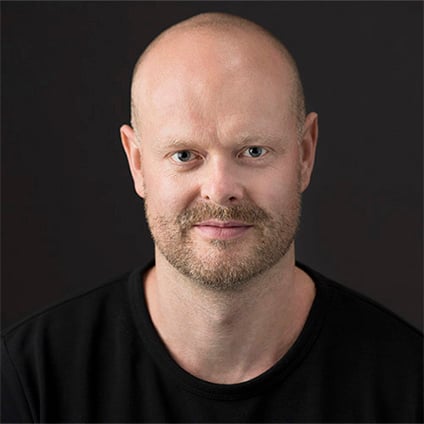
Joel Monk
Joel Monk is a leadership coach, educator and entrepreneur. He co-founded Coaches Rising, a company on the cutting edge of online coach training with a community of over 65,000 coaches. Coaches Rising programs regularly include participants from every continent on the planet and they have collaborated with some of the leading minds in the field of human development and coaching. Joel is also a leadership coach, coaching at companies such as THNK, Booking.com, Siemens and Naspers. Joel has designed and led several entrepreneurial and leadership development programs, at places such as Socionext, THNK and The Impact Hub Amsterdam.

