1X
Subscribe:


Just enter your details — and we’ll send you the latest insights right away.
01:40 Introducing Ewan
08:25 Exploring the foundations of work
13:25 Creating a more meaningful framework
17:25 Accessing our true work
24:55 Truth, beauty and goodness
28:20 Artist, Merchant, Seeker
37:20 Gifts and shadows of the artist
41:50 The shadow of cultural glorification
45:20 Suppression of the archetypes
51:20 The role of the artist and seeker in business
56:50 The essence of the Merchant
1:02:20 Exploring the Seeker
1:09:20 The relationship between 1st and 3rd person subtypes
1:12:20 Finding our strengths & suppressions
1:18:40 Imaginal practices to connect with your subtypes
1:24:20 Transmission and the alchemical process
Resources Mentioned:
Ken Wilber
Debbie Millman
Joseph Campbell
Adam Kahane
IFS
Joel Monk: [00:00:30] This has been like a long time coming as doing a podcast together. We've talked about it over the years, but I think this is actually the reason we're doing this today is like the best reason to do once I'm glad we saved our first podcast for this moment because you have a book out Artist, Merchant, Seeker, which is really brilliant, and we're going to explore that today. How you doing, Festival?
Ewan Townhead: [00:00:56] Really good. It has been a long time. I was thinking about that this morning, like the amount of times you asked me to come and do stuff on the podcast with you. [00:01:06] I always kind of dodged it or said, ah, I don't really know what to talk about right now or you're, but it's the thing, that's the thing you're good at and yeah, no, this feels like a perfect time.
Joel Monk: [00:01:20] You know, for me, we've had so many extraordinary conversations over the years, you know, deeply formative for me, you know, in my life. And I think that's, there was always a sense of that's why I want to come on the podcast together and talk. So, Just to say a few words about you to people listening so your, you know, you're a brilliant entrepreneur and marketer, deeply soul infused coach as well, a really extraordinary coach and [00:02:01] as being like the engine of our entrepreneurial growth and how we share who we are, which I think many people have felt very touched by and just one story that comes to mind. I want to share with people listening is you know, Laurens and I founded Coaches Rising and You know, they've got a quite a long time ago now, and the first couple of things we launched just didn't do very well. Like, I've got that penny, penny jar story, which I haven't wheeled out for a long time, but, you know, I thought I was the first product I was like, we're gonna make it.
Joel Monk: This is it, we're gonna sell thousands of units and we didn't, and then I was living out my penny jar. but then you came in, you stepped in and it was you and you're thinking that actually helped off first launch, like the launch that made money happen. And that was really significant because I think Laurens and I were like, we got to the point where we're like, if we don't, if this one doesn't work, we'll pack it in, you know. [00:03:04] and it worked and that was down to you. So just want to name that. That's very important in the growth of coaches rising. So thank you for that.
Ewan Townhead: [00:03:14] So welcome. It was a joy to do it. I remember it vividly. I still remember you were living in that upstairs apartment, you parted at the Yeah, I remember all these meetings. I remember that delight when people received it really well, and we got pretty considerable enrollment. Well, a really considerable one for the company at the time. Exactly.
Ewan Townhead: Exactly.
Joel Monk: [00:03:47] Yeah. And is there anything you would like to say about what you're doing who you are to the audience that I didn't name?
Ewan Townhead: [00:03:54] Yeah, I was feeling a bit of backstory. [00:04:01] Well, I could say, I remember first meeting you, too, and we could tell that story, which was in, I think, 2006 or 7 in Ken Wilber, meetup group, in Manchester. And, um... Yeah, we became brothers pretty fast and have been on quite a journey so a bit more about yeah at like you I got deeply interested in spirituality and meditation and consciousness and philosophy and Wilber's work and other things in our 20s and then yeah that led me into this. journey into business and entrepreneurship, which I never would have thought I would have taken. I was like you, early days, I was basically an artist. When we met, you know, you were working as an artist too. And I thought I was going to be a musician, thought I was going to do other things.
Ewan Townhead: [00:05:00] And it just wasn't the path, it just wasn't the path. And in fact, it was a coach who helped me see write songs and get my workout there and get a recording deal and all that kind of stuff and during one session when I had enormous resistance and just the whole thing kind of wasn't flowing. You and do you feel like you have to be a musician? And this question just dropped I was like 25 at the time or something. It's a question just blew my world open and I realized yeah, do you feel like I have to be a musician? And I don't want to be one of these isn't the So as you were setting up, coaches rising, I was setting up with two other friends of ours, waking up the workplace, which was an early venture of mine, probably my earlier success.
Ewan Townhead: We did an online interview series again, early days, so in instant LSM and RSM, you remember that? [00:06:01] Yeah. And we had, you know, like our heroes of the conscious business field at the time, young, kind of an unknown thing at the time, still I remember like Googling conscious business and very little came up that was Fred Kaufman's book and some other stuff, but that wasn't a turn that was even really used at the time. And I learned a lot about that, about how and the sort will segue into the book later, but it taught me a lot about how business and spirituality, are can be integrated deeply in some sense, two dimensions of the same path. I was able to kind of burn in question in me. From the beginning, I wanted to know, well, how can I come into business and make interesting things that are about consciousness growth?
Ewan Townhead: So that was my interest. That's my passion. And that question burned in me for a long time. [00:07:01] And that series entered a lot of those questions. And then many years of actually doing the work and set up with another partner, early conscious business training school online, then I started coaching myself in 2014, and that's when I came on board with you and Laurens, and ran the marketing for coaches rising for just over 10 years, I think. And that was a whole, I was a whole journey in maybe a story for a different podcast, but yes, now I'm back to you, full-time coaching and writing and of course the book which took a lot of effort and artistic craft.
Joel Monk: [00:07:49] Yeah and I think it's a beautiful book especially I think to our audience I really recommend it people who care about what you're talking about you know what is this place where we can [00:08:08] Yeah, our artist and our capacity to create things that are deeply meaningful to us, that serve the world and do it in a way within integrity. That this is a really beautiful book that outlined some key aspects of that for me. And so I wanna ask you on the moment, but just to kind of riff on something you just said, there are about conscious business. It feels like contrasting our times where there is an interest in that, but there's also been a kind of fragmentation in the world where there was a split between science and spirituality and business and so I think for a lot of people in the world of work, there is a lack of meaning, there's a lack of purpose. and those you could actually say right now like is there you know there's a lot of business going on which doesn't seem to be for the good of the whole you know it's at the expense of planet or ecosystem and so could you say a little bit about well [00:09:17] What is the context you see for work in our times?
Joel Monk: Like, if you could just speak about, it's particularly in the beginning of the book, you write about sacred work and the soul's path. And how do you view what work can be for people?
Ewan Townhead: [00:09:39] Yeah, in the book, in a very short section in chapter two, I give this brief archetypal history of work. And we can see it in some of our myths. I think the one that's probably most familiar to us is the myth of Adam and Eve. [00:10:01] Let's call it a myth, sorry. I'm not sure, I don't think it's a literal story. So let's call it a mythical story of Adam and Eve. And the moment when they become self-conscious and they wake up and realize their naked, the first thing that God says to Adam is, Basically, now you've got to work.
Ewan Townhead: You've got to work by the sweat of your brow and that's how you're going to feed yourself on your family. And so this idea of dedicating ourselves to something without time here in this world is a really, really old one, perhaps even, perhaps it happens in a confluence with the birth of self-consciousness, that could be the suggestion of that myth one way to read it. And so I think it's a really deeply coded aspect of being a human, and yet yes, like you say, are modern, holding of what work is in my mind is very constricted and very narrow often. [00:11:08] um work in a classical modern context is it's the job you do. You do the job because you train to do it and you think you're good at it and people will pay you to do it and then you can pay your mortgage and buy things and we can't our workers that thing. What I'm saying in the book is I think workers it's a wider circle than that. the function of a, it's like in the polarity of being and doing, work is function of a being doing something. And what are we here to do?
Ewan Townhead: I've had a, I couldn't explain it at first, but for a very long time, I've just had a deep inner knowing that we come here [00:12:03] It's not set in stone. It's a great deal of freedom, I think, expression in how we do it. And this world has an amazing creative place, but do you think we come here with an intention and something to do? And especially in these times when... Well, it's pretty crazy, man. Like, it's, you know, when we meet up these days and talk about life and what we're up to, you know, we often talk about, wow, full-on stuff, we're in a, we're in a intense phase here. And so I think it's perhaps more important than ever, and perhaps part of the transformation we're in collectively that we become intimate with that which we feel like we're really here to do.
Ewan Townhead: And so in our modern world [00:13:02] that's not necessarily true if you go back further into our history or look at some of the spiritual traditions and especially in the east. There's a very strong teaching about sacred work, essentially, and how the work that we do is in service of the one God spirit, you know, whatever you and I think that re-uniting of work and ostrichuality is paramount. really personally it's also being my quest like how can I find a frame for work and what I'm here to do and what I like to help people do. [00:14:00] That is why I didn't offer all this for all the things that I feel like I can think.
Joel Monk: [00:14:07] Yeah, what's your intention for this book and related to that, you know, for people reading it, do you ever sense of like what it's a catalyst for related to what you're saying?
Ewan Townhead: [00:14:22] Well, I think one of those, the intentions, the heart of it is really to your widen this definition of what our work is here in the world, It's how the very first chapter starts. You have work to do in the world. It's your work. And I've known people who have engaged my work over the years have found that quite liberating often. It's like more can be included in who they are and what they're doing and the businesses they're running. [00:15:04] And then I guess really the intention is essentially to help people with their own path. Like we're all on a different work path.
Ewan Townhead: We're all helping each other and into mixing. But I feel like we're all on a very unique path that is function of our souls and who we are. And I kind of wrote the book to activate these deep archetypes in ourselves that I think are core to work we do as entrepreneurs in particular. And so I hope the book helps people find those in a dimension of themselves such that they have room for it all and it integrates. And when we get into the content some of this will be clearer about what I found is that [00:16:02] We tend to have more native archetypes in us, for example, you and I have a lot of native artists. And then there are archetypes that are less native to us, or perhaps even foreign, or perhaps even repulsive, that we are therefore invited to work on integrate deeper, because they're all different facets of the work we do.
Ewan Townhead: So I hope the book helps people get in touch with more of their own multidimensionality, and feel empowered to embrace all of that and integrate it into the work they do and be of greater service. Beautiful.
Joel Monk: [00:16:37] Yeah, that's what I think is really beautiful about the book. These three archetypes contain so much when it comes to manifesting ones work in the world, you know, in that broader sense, their soul's gifts. I want to go into those in great detail, but I just before we do, Could you say something about what it's like to, how we can tune into, you mentioned like, it's unique like the work we're here to do in the world? [00:17:08] How have you tuned into that for yourself or how do you help your clients do that? Because I know you as someone who's very good at that and has a gift for, helping people, you can see, often see that in people, that the thing, what is the core of that thing that they're here to bring into the world, which gives them confidence. So how can we begin to tune into that sense of what we're here to do?
Joel Monk: Which is a big question, I know.
Ewan Townhead: [00:17:43] That is a big question. It's a great question too. I mean, there are probably a bunch of different, you know, coaching or personal growth exercises that both you and I know that can definitely get at this kind of thing, I think there are many different ways into this. [00:18:09] I think the thing that has worked for me, all basically that I've found myself, this is It's really a process of, it's meditative, like that kind of deep inner stillness. But it's also a marginal. It's about really dropping into the center of yourself such that you can kind of allow the visions and dreams of who you are and what you feel called to just kind of a rife. And then you witness them.
Ewan Townhead: I think those give us amazingly powerful clues or maybe more than clues as to what we're called to do. [00:19:05] When I'm working with clients, I will get them to do visioning and a particular way of looking at how we vision off each another's intellectual exercise, but as a more of a, dreaming exercise and the dreams aren't kind of manufactured or you don't put your mind or you go it desires into them it's something that you're shown that's the difference and then what I found is I just seem to have an ability to kind of tune into someone's essence and who they are and therefore in my coaching I'll do a lot of through to over time kind of reflecting back who I see someone as being and it normally resonates but it's certainly then in the interpersonal field that will kind of feel the resonance of like, oh yes, it's this kind of thing. [00:20:06] And when you're trying to tune into someone's essence of a soul, It's not really objective or quantifiable. It's often held in metaphors or images or archetypes. And I think getting a sense of that very deepest or highest level of an individual is,
Ewan Townhead: That's pretty key to working out what you're here to do. And then you get to interpret it, because it's not a set of instructions. It's a, you know this, but I know you know this. I think it's a process that requires us to really, really be taught by what we're shown.
Joel Monk: [00:20:57] That stands out for me that there's a receptivity needed. [00:21:03] and a resonance with the received, you know, images or metaphor or felt sense. So how do you see that path? Like, first of all, here you saying you give clients a visioning exercise and is that where they would sit and, you know, imagine, or go on on an receive information and then and then is it about sitting with what's received and resonating with it in a tuning so it becomes more familiar or available as something that can be embodied.
Ewan Townhead: [00:21:46] Yes, so with clients apart from the kind of less structured soul tuning in thing, the exercise I've found most powerful over the years is one I think you've done too, which is from Debbie Millman. [00:22:02] The designer, her and host of the design matters podcast, her 10 year visioning practice is just amazing. It's a wonderfully powerful exercise in brief. you write down today's dates, but in 10 years time. So we'd write down second of July, 2036. And then you just, again, from inside, but you write down the pitch you see of the most amazing wonderful life that you've created for yourself. On that day, how you wake up, where you wake up?
Ewan Townhead: What does it feel like? What are the curtains in the room? What do you have for breakfast? What are you thinking about during your day? Who are you seeing? What are the things that are inspiring you? What's challenging you? And you just kind of draw out this vision and her recommendation is, once you finish it, you just put it away and you read it once a year.
Ewan Townhead: [00:23:03] Another one is you don't really think about it and magically a bunch of it comes true. I think it does something really powerful because again, like we were talking about earlier, it's not, you're not manufacturing something. When you do that exercise, it's not like you're playing an intellectual game with drawing out the thing you think you want, it just comes from your heart somehow, it's already inside and somehow it comes out onto the page and you can see it and you can feel it. I mean, I think there are some more mysterious, mystical processes that happen as a result of doing that kind of thing, but I think it's also very psychological. Once we've seen that vision, and we just kind of hold it in the back of our awareness, we tend to get that direction, like we tend to follow that compass reading there. [00:24:09] Yeah.
Joel Monk: [00:24:11] Yeah, beautiful. And the integration work it takes to be able to live that more and more, you know, like so there's a one aspect which is the tuning into that deepest heart's desire and then another which is integrating the part or you know or disidentifying from the structures which say that's not possible to be that or live that.
Ewan Townhead: [00:24:41] Yes.
Joel Monk: [00:24:44] Well, let's talk about the artist, the merchant, and the seeker. Could you talk about why those three archetypes are important to you? Why do they fit together? We'll kind of start maybe on a high level and then zoom into some of them individually.
Ewan Townhead: [00:25:01] Mm-hmm. Yeah, let me set up a bit of context for this, because it's interesting how it came about. You've read the book and know me, so you know, but for everyone listening. First, I kind of came through organically. I was writing a lot and polishing a lot of my blog at the time. And I noticed that I kept talking about these three archetypes. It's like, it's interesting. And then one day, I realized that they aligned rather perfectly with this deep philosophical structure
Ewan Townhead: So, can we do a bit of philosophical ground setting? Yeah, okay. I know you know some of this. So there's this really old idea which kind of begins with Plato, and we see in all kinds of different places, Western philosophers, Eastern systems, which divides reality into three dimensions. [00:26:10] And we can know them, perhaps most famously in Plato's terms of the good, the true, and the beautiful. And I remember first hearing Wilber talk about these ideas. In fact, there's the first thing I ever heard in talk about when it was at university, and it just grabbed me something when, yes, I maybe I even know this somehow, this feels so powerful.
Ewan Townhead: So there are these three different domains of reality that you can't reduce one to the other. They're very different than they're all part of the picture. And what Wilber does in this master integral move is he points out that they align with our grammar in the way that we use language. [00:27:01] So there's a universe of grammar structure in our language that has first second and third person that we build into how we talk and think about things. It's in all modern languages, it's in just about all the languages we know about. So the first person would be me, I'm speaking right now, but I'm speaking to you, you're and we form a relational field and then there's something that we're talking about, so in this case my book, that will be the object, the third person. And so what Wilber pointed out is those pronouns, I we in it directly line up with the good, the true and the beautiful, the reflections of those same dimensions,
Ewan Townhead: But what I saw is the three archetypes of the artist in the merchant and the seeker also a line. [00:28:01] So that the artist speaks the language of beauty, essentially they're trying to find and capture and create things that move them because it's beautiful. And beauty is the ultimate subjective experience. I like it, you hate it, or whatever it may be. The Seeker speaks the language of truth, they're trying to find what's true about themselves in the world, what is the nature of our reality, which is a more objective search of what is true, this is not true. And then this is the one that was a kicker for me that I had to process a little bit, but that the merchant is actually the one that speaks the language of goodness. As we know, there is plenty of merchant shadow in our world. [00:29:03] And we see how destructive that archetypal power can be.
Ewan Townhead: But it is root as an archetype. It speaks the language of goodness. And you can see that also in our language that what does a merchant trade in? Well, they trade in goods. holdings of the merchant again in the east, whether I think they had less of an issue kind of separating the practical from the spiritual like we have had in the West Peps. There there are, for example, in Japan, there's a tradition of, or what's noble, mercantile activity. It's something that's good for me, as the seller, it's good for you, as the buyer, and it's good for our community.
Ewan Townhead: And if it's good for all those things, it's good. [00:30:00] And we could talk about more of that detail when we get to the merchant, but that's how they align with those three deep structures.
Joel Monk: [00:30:11] Just on that note about the shadow, merchant. You know, because I think a lot of people will feel what you said, you know, like, hey, look at the world right now that doesn't seem like businesses overall having a positive impact. Although, of course, individually, there are many great things. It's very hard to pull it apart. It's very complex. And wondering, and this may be why the integration of these three the impact of the separation of, you know, truth and seeking and spiritual meaning from business and the artist, do you think that's actually what has led to the shadow merchant being so prevalent in the world?
Ewan Townhead: [00:31:02] Good question. It probably has, I'm not sure I could justify why exactly that's what I have to think about that. But I do think that's true. What I do definitely think though is we're kind of living in the age of peak commercialism, metaphor for this that he says you can always tell what's the most important institution in any particular society. You can tell by looking at who's built the tallest buildings and then you can see who has the most importance. So it used to be castles or cathedral or temples or pyramids and now it's skyscrapers.
Ewan Townhead: [00:32:00] So our commercial institutions are incredibly powerful. And I think therefore, when a archetype is in a kind of collective ascendancy, we're going to see the light of it and we're going to see the dark of it simultaneously, both very, very clearly. free markets or relatively free markets in modern democracies have created, I mean, it's just unbelievable that the life expectancy, the freedom that we now have to even have this kind of conversation is remarkable and the gifts are just so many and we see so much of the shadow of these [00:33:00] institutions that have become so powerful, and that there is no one to stop them, essentially making the deals good for them at the expense of either their customers or the environment or our society. And so it violates that integrated view of the merchant and how to determine whether it's really bringing goodness into the world. It's probably not very many years ago most people would say, you know, a higher ethical aspiration to have in business is just ridiculous, you know, that's, businesses are simply about making money. That's changed already and it's changing and I think has to change a hell of a lot further.
Ewan Townhead: And will do, that's the path we're on. But I think that's why I think the merchant is in its ascendancy and we see the light and the shadow
Joel Monk: [00:34:02] Yeah, it just makes me think, before we dive into some of these, the three archetypes and more detail, I was talking with Adam Kahene or at love and power, and that he said now, he thinks there's a third entity that's needed, which is justice. And you know, I was thinking, but it's just this to me, and I was like, well, You know, of course, you can create just systems of just this, which are important, but it's also something lived in the moment, you know, it's a kind of felt sense of, and I think this is where I kind of connected to the good, the true and the beautiful is like, is it the very conditions of our time where, you know, there is so much uncertainty and a system it kind of you know, more and more people are looking at like, hey, my life has lacked meaning. And you know, a lot of people left work because they felt like it just wasn't a place where they found meaning. [00:35:06] And so I think it could lead our times could lead to people kind of re-emphasizing, the unification or the integration is the word I'm looking for of these three archetypes that what's the point in doing work if it doesn't have integrity to it, if it doesn't serve more than just me but it needs to serve the whole. come from our greatest artistry and to come from our sense of deep meaning and love.
Joel Monk: So yeah, it's at there's something about these three archetypes emerging coming together in this time. They're fine, very, very beautiful. And an expression of your You know, the receptivity that you had, you know, to receive how they fit together with the the true, the good and the beautiful. [00:36:07] It's really beautiful.
Ewan Townhead: [00:36:09] Yeah, I love what you say. I do think we are in time of tremendous upheaval and change when lots of things that have historically been kept separate and segregated. don't want to be separate anymore and we're finding all the strange and magical mixtures of these things and we don't know what it's going to look like but I think it's going to look really different. I mean it's already looking radically different. Now compared to when you and I started our entrepreneurial paths, it even looks different. You know I first started writing this book actually nine years ago. and already since then, you know, the marketplace in our world has changed pretty radically.
Joel Monk: [00:37:00] Yeah, yeah. Yeah, these are our alchemical times, aren't they? Can we talk about the gifts and the shadow and the subtypes of the archetypes? So maybe it's good to start with the artist. But I'm open to wherever you want to start, actually.
Ewan Townhead: [00:37:21] Yeah, so the artist is, like I said, it's speaking the language of beauty. And just to say, this is not a typology system where one person's one thing and not another thing and you get to be the thing that you are in field special. This map is really more about revealing, these core archetypes that make up work and entrepreneurship in specifically. And so therein all of us we all have them to different degrees of and so the artist speaks the language of beauty and it's it's our creative dimension, it's the part of us that [00:38:12] for some reason or another, feels drawn to making these things that excite us and we find beautiful and joyous and it's where we want to express our own subjectivity, like we have a view of the world though, we see things particular, particular ways or we feel things and we want to express those and forms that other people can experience. That's what art is. what so it's gift is it connects you to your own creativity and the things that are outside of all the boxes and all the frames.
Ewan Townhead: Artists often seem to exist at the vanguard of societal transformation too. [00:39:00] Like before we've kind of clocked that the thing is really happening and what it is, the artists have already been expressing it in their forms, but they don't fully You're not in control of what you make, I think, anyone who really practices the creative acts will know this that it really feels more like you're a vessel that something comes through. And in old times that's why they talk about the idea of the Damon or the Muse, they had a very explicit understanding of this that it's not you. you're making yourself open so that something can come through you and it's unique because it's coming through you. But it's coming from somewhere else and it's your job to just kind of allow it and then craft it. So yeah each archetype then has three subtypes which are divided [00:40:05] It's a fractal structure, so it also uses I, we in it, good to turn the beautiful.
Ewan Townhead: So the first person expression of the artist is the poet. It's the quintessential channeling of the idiosyncratic thing that comes through and it's just it's poetic and it's all about personal self expression. The artist in its second person, the subtype is the performer. So that's when the art is created in relationship with others. That could be the classic vision that comes to mind for me as someone on the stage, of course, performing a show for other people. But that performance can actually take many, many different forms. But it's essentially when art happens in connection and in relationship. And then in its third person state, it's the artisan.
Ewan Townhead: [00:41:03] The one who is the craftsman, or the craftswoman, who fashion things over and over with skill and dedication to make them into these elegant forms. And so in the subtypes, you can kind of see that they all join together to make a kind of artistic hole. There's the poetic dimension that just channels the magic. There's the artisan that you can craft it into forms that really impact others and the performers, the one that can bring that to life in relationship to other people.
Joel Monk: [00:41:39] And I read in the book, you know, there's a shadow which is where you can either instead of
Ewan Townhead: [00:41:55] exactly, which is how all of the shadows kind of seem to manifest structurally, as far as I can tell. [00:42:03] But something you make the bigger thing about you as a person, you make it go essentially. So yes, well, the gift of the artist is to become a channel or a vessel The shadow artist thinks they're beautiful one. And in fact, they get envious. If others seem perhaps more beautiful than them, or others art seems more impressive or more glorious. And that becomes a kind of desperate need to be seen and celebrated as, You know, so our celebrity culture has lots of this, not all of it.
Ewan Townhead: I think it's probably a very difficult position to hold in our world with that much attention on you, you know, like the big movie stars or something, but we see it in some of those places where or I've seen it especially with, you know, the musicians who become incredibly famous, [00:43:16] And it's like they kind of, they struggle to separate that fame from their own person. And so they think, you know, they're the special, most beautiful one, the prima donna that should be central of everyone's attention.
Joel Monk: [00:43:33] I mean, I can get at that young age that would be almost impossible, unless you were a kind of exceptional person.
Ewan Townhead: [00:43:40] Yes.
Joel Monk: [00:43:41] And there are those around, you know, I think I would be just be so captured by that. And you know, read an article once and it was about famous musicians who... about the journey of where there were peak fame, and then suddenly they stopped being as famous. So, and all of Robby Williams was one of them, and he said, like, I'll give anything to go back to that time, I'll give anything. [00:44:03] If you were both, all being really frank about it, you know, it's like Susan Vega was like, you know, the limousine would appear at the airport, and then it took me to the hotel, and then one time I landed at the airport, and the limousine wasn't there. You know, and that was like the first sign of like the declining, you know, and it's suddenly there was like 500 people at my gig instead of 50,000 before I knew it, you know? And so I do want to open up, if there's anything else you want to say about these subtypes, but something that strikes me again, you in which is my senses, you're articulating one of the in our times, which is that move from, you know, it's all about me, orientation around like my own safety and control and success to a wider sphere of concern, you know, being the channel or serving the greater good.
Joel Monk: [00:45:05] So there's a, there's a kind of blueprint in what you're offering here, which I think is very profound.
Ewan Townhead: [00:45:12] Yeah, I'll add something else, I'll add something else, I also explore in quite a lot of depth in the book, what happens when each of these archetypes is suppressed, which is probably more pertinent to the works and deal with them. I don't. It's not like there's necessarily a lot of shadow work, or at least I haven't found it with clients, to do it's more about looking at the archetypes that they've got suppressed in themselves for one reason or another. And I think we see the cost of suppressing the artist quite widely in our culture and especially in our work culture. [00:46:08] kind of emptiness and a kind of flatness and a kind of nihilism because we're not feeling expressed. And so what we tend to do is because we're not opening up that creative channel to allow our own creativity to express, we consume beauty instead. and we see that, I think, widely in our culture, how easy it is, and there's some amazing stuff to consume out there is what makes it even more challenging, but I think it's more common today that people spend a lot of time consuming the beauty of others rather than making it themselves.
Ewan Townhead: And I think that has a cost on your vitality. and I think it, it also kind of blocks you from seeing to go back to your earlier question about vision and what we're here to do and how you find that. [00:47:04] I think the artist is an amazing way to discover that because when you create us, writing is the main thing I do. So when I'm writing I'll discover stuff that I didn't know because it comes through and then I read it and like, Man, oh yeah, okay, that thing. So it gives you clues about where you feel drawn that you can't access with your more strategic mind.
Joel Monk: [00:47:34] I've been struck by how many people I know who run businesses recently that I had conversations with that felt the call to embrace their inner artist. It was a definite theme, and I know for us too, as well, you know for yourself and for me, it was like you, you just started to kind of become parched, and you're not feeding that artist. [00:48:00] And so, and I love that distinction of, yeah, we are consuming a lot of art. So, is that the invitation here? You said it's not really shadow work. It's more seeing where they're suppressed. You know, if we take the poet the former and the artist, and would it be to look at those and see where you feel you're more suppressed? Or is it more about looking where you feel like would bring the most amount of joy and energy
Joel Monk: and then kind of doing that thing, creating rather than consuming, creating, you know, in inverted commas poetry, whatever form that takes, few or is it, yeah, how would you invite people to, if they feel that artist is suppressed to, to give it space,
Ewan Townhead: [00:48:53] Yeah. Well, so in the book in chapter eight, I give some practices, maybe we could talk about that later, to about how to engage with these these archetypes. [00:49:08] I think, I think that the essence of it, though, is what you said. It's kind of feeling the thing that you just feel excited to make, even though you can't rationalize it, or it seems like it wouldn't lead anywhere, or that anyone would care. There's just some kind of impulse you have inside that art. You had to love to make that thing, whatever it may be. And the key for the artist in us, in these times, I think,
Ewan Townhead: making space for it. It's rarely challenging. This is what I struggled with and I don't know if I've had challenges with. If you run a business and you're really busy and you're to do list, never ends, it can be really hard to find any time. And the artist I think does require space [00:50:03] you know a couple of hours in the morning or whatever it may be and you don't turn your phone on first thing and you just be in your own energy and you see what comes out and it's a practice of getting into flow and just allowing whatever wants to come through to come through. So for me like I said with writing it's sitting down to write without distractions You can't control the quality, like maybe you don't like it at the end, okay, that's part of the creative process, but especially that, you know, for the first 10 or 50 minutes, you may have massive resistance and, you know, even really practiced artists and writers often speak about this, it's just going to part of the process that is this is it's not really working, this is crap that's coming out, you know,
Ewan Townhead: [00:51:01] You've got to stay in and allow the dark and muddy water to come out of the tap first. You turn the tap on the dark and muddy gunk comes out first. And if you stay with it, if you stay with it, if you stay with it, it'll start running clear and you'll start finding some things that come through. So I think it's about, yes, just feeling what we're really inspired to make and then you've got to make the time to do it.
Joel Monk: [00:51:28] It's, for me, the artist and the seeker are where the magic in business come in. You know, it's like the sourcing, the place of sourcing and magic in innovation. And, you know, that can plug into the merchant, you know, and feed and feed it. I mean, it's not like they become, they come before it, they're all together.
Ewan Townhead: [00:51:58] That's what I always found personally, kind of, more distasteful about some of the business commercial world that it just felt really shallow and like it didn't have the depth and the magic in it, whose good stuff happening, whose good people doing good work, [00:52:21] but it felt like it was, it had narrowed its perspective to only focus on this very commercial dimension of work. And yeah, I think when you integrate the archetypes, then you get some really interesting stuff happening.
Joel Monk: [00:52:41] So many ideas bubbling here of like the difference between information and wisdom and how the disconnection from the artist and the seeker has led to in the business world and in society of proliferation of like emphasis on information, you know, which AI is proliferating, but I think if you bring the artist and the seeker in, then it reconnects as to the wisdom [00:53:09] Yeah, that we can, you know, as a, as a, as a kind of form of intelligence of orientation to what's most important, right, absolutely.
Ewan Townhead: [00:53:18] I'm, you know, you making me think about how the marketplace has changed the last 10 or 15 years. I mean, when we started. the kind of the idea of content marketing or making content was like really new. I was still quite, you know, on the fringes. That's obviously central now like every, every big company is running that kind of content strategy now. But I think what that strategy was doing is it was saying, the mercantile offer itself like here's some teaching material or here's something that would help you understand things or here's something creative and funny and interesting. [00:54:11] And so when people talk about content I think what they actually mean is an integration of those three archetypes like yes it's in service of the business we're running what we offer to people
Ewan Townhead: but it's also interesting for its own sake and hopefully it's also beautiful or creative or inspiring in some way. And I think those are what, at least in my philosophy of marketing, that's what transmits the signal of who you are and what you're here to offer and and where your juices and then allows people to resonate with that to find you, the risk of using AI to generate all your content for you is it doesn't, it can muddy that signal greatly. [00:55:00] And when there's a thousand other signals of also other AI-generated stuff in the same space, when you're integrating these archetypes and what you're putting out there, I think you're much more likely to cut through the noise and for people that actually resonate with you to be able to find you, because they can feel you through what you're putting out. If AI is made it for you, they're feeling something because you've contribute to the process and there is a skill in in using its help, I think, not anti-AI by any means, but the risk is if you get it to do it, it doesn't have your own creativity in it, and then it doesn't carry your signal, and then it can't really do the kind of marketing that at least I believe in.
Joel Monk: [00:55:51] It's a bit like those notebook, LLM, kind of podcast, fake podcast conversations between AI, there might be people out there that love listening to those, but every time I put one on, within about 15 seconds, I've turned it off, I'm like, [00:56:08] that it's just, I'm not feeling it, basically. And I think what you're sharing now is really important. It's like it could become hopefully, you know, hands-in-prem, it becomes the differentiating factor for people in business that, you know, people who are transmitting that frequency are, winning out that authenticity that resonance is felt by people and it's having them rise to the top. So let's talk about the Seeker as well because you know we want to make sure we get kind of just name the two of their archetypes and their subtypes. So are we, do you think the Seeker is a good one to go to the next or the merchant?
Ewan Townhead: [00:56:50] Let's go to the merchant, let's kind of sequence We talked about this a bit already, didn't we, as you were asking about the shadow and our current capitalist system? [00:57:03] Yes, the essence of the of the merchant is to create goodness. That's the way I characterize it in, in our modern vernacular, we call that value in economics. and the amazing thing when trade and exchange is done ethically, is it does just create more goodness, like that. So that's the economic insight that I came to understand as I dug in, at least enough, to grasp the thing. So when I have something really valuable to you, And I exchange it with you for something that you have this really valuable to me.
Ewan Townhead: [00:58:01] We create more value. It's this magical thing that makes economics work. Like we all swore our value and the value pie as a collective gets bigger. That's one of the fundamental tenets are economic systems based on. So that's what the merchant is doing. It's trying to understand what do I have that's really valuable and good for the people around me and how do I get it into their hands and we do trade and exchange such that we both benefit and the people around us benefit. their subtypes divide across the same triadic structure. So the first person of the merchant is the innovator, which is, like the merchant's creative dimension, its artistic dimension.
Ewan Townhead: [00:59:04] But it's putting that creativity and artistry to work on making more valuable offerings for people around them. So how do I put ideas together or technologies together such that it's even better and makes it even better for the people that can use it? So that will be the innovator. The second person of the merchant is the marketer. So how? do I, as the merchant with my offers and wares, how do I relate with you, as my audience or my customer, how do I speak into your listening, how do I understand your needs, how do we create enough trust that we can make an exchange. And then the third person of the merchant would be the operator.
Ewan Townhead: So, as you know, you can't run a business without operations. [01:00:06] And that's why most small businesses or founders, if they hire someone to come and join that team, the first hire is normally a COO. Okay, we need someone that can actually make this whole thing work. You could have an amazingly innovative product, and you could have an amazingly receptive audience for it. But if your shopping cart doesn't work, or your product flow hasn't been calculated right, there's nothing to buy and there's no goodness created. So the third person dimension of the merchant is the operator, how we make all of this organized and work together. So again, you can kind of see those three subtypes, create something of a whole where there's the creative dimension that turns things into innovative products that can create value or goodness for people.
Ewan Townhead: The marketer is the one that can relate with the audience and the marketplace such that they understand it and we can say yes or no and they operate it who makes the whole thing work such those exchanges can actually be be made.
Joel Monk: [01:01:16] There's three very powerful subtypes in of themselves for business, you know, I think a lot of people listening will recognize the importance of those and, you know, I'm just reflecting on how, again, how easy it is to kind of, lean into one, like the operator, you know, for me, is very easy. A common in my own journey in Epstein with others is that the, you know, your end operations can take a lot of time and that ends up kind of squishing the creative juice of the innovator or the other archetypes, right?
Ewan Townhead: [01:02:00] often incredibly business busy as business owners and the so much to do. And yeah, I think it's such a common problem that we get, we get trapped in all of the operations and can't zoom out and look at our innovation, for example.
Joel Monk: [01:02:17] I'd like to bring in the Seeker, because I do want to make some space for us to talk about the marginal practice as well, so could you weave in the Seeker and
Ewan Townhead: [01:02:29] So the Sikha speaks the language of truth, and they're essentially on a knowledge quest. It's like, what is the nature of this world? Who am I and what's going on here and why am I here? I think that's such an integral part of our human experience. in my experience, the quest for truth is one that has to weave through paradox, because what we discover is, okay, especially when we're young, we think we've got it all worked out, this is how the world works, these are the bad guys, these are the good guys, whatever it may be, and I think as you wind your way along the the Seeker's path, [01:03:23] it's a lot more than you want than that and truth can reveal itself in all kinds of ways. And so how can we hold multiple truths? How can we be humble enough to have our minds changed on things that we thought was the way it was and actually the evidence suggests something else?
Ewan Townhead: I think we can I think we can get a flavor of the seeker by the subtypes too, because it's an archetype that I think is also quite fragmented and our culture right now. I write about that in the book too, so the first person subtype of the seeker is the mystic. [01:04:06] And so the mystic is the one who searches for the truth inside of themselves. the pure mystic is does what, you know, the mystics used to do, which is they probably lock themselves away in a cave or a chapel and they just commune with the nature of their own experience. and going, and you know this, we've talked about this many, many times over many, many years with the experience of going inside and discovering what's true about consciousness and ourselves and the world has an amazing process. That's one of my more native types. The Seeker in its
Ewan Townhead: [01:05:01] And I really like that name for it because the word scholar has this interesting etymological history. It kind of means both student and teacher, which is exactly the right name for this architect because I think when you explore the nature of knowledge and wisdom and truth interpersonally you're learning from others and you're teaching others. And hopefully that actually happens simultaneously. I think the best teachers are learning as they go by teaching. And so I think we see that, you know, our academic institutions are, of course, built on this kind of archetype and the idea is that you come up with your maps or theories or propositions of the world and then you go and talk with other experts or other researchers in the same field and you debate or you argue or you inquire together and you make meaning from reading or studying the the prior masters that [01:06:15] scholar or a lot of scholar archetype probably have a lot of books and just, you know, loves exploring different perspectives and trying to make sense of the whole thing by stacking them all up together.
Ewan Townhead: How do we make sense of this great web of ideas? And then the third person, expression of the Seeker is the scientist, which is very, very strong in our culture. So the scientist wants to look at this objectively. and not interested necessarily in the first person. Notions of mystical truth, they want the evidence. They want a positive theory of what could be. They want to test it and witness it. And collect data or evidence to support or dispute that theory.
Ewan Townhead: [01:07:03] The science, the scientist archetype has, transformed our world as such a strong archetype in our culture and our technology as a result of the amazing scientific work and there are so many fruits and I think the challenge we're having in our culture is that the Seeker self is quite fragmented. In fact, because I would say that the Seeker is essentially a spiritual archetype by nature even though it can express itself in very our culture kind of sees the scientist as the Seeker self and that is the root to truth. And certainly the two wings of the Seeker, the mystic and the scientist are very estranged in general. There's more connecting happening. There's amazing people that absolutely integrate that, that divide in glorious ways, but as a cultural large, those are pretty separated and considered paradoxical. [01:08:08] They don't fit together.
Ewan Townhead: And I think that's changing, but that's one of the big shifts we're undergoing.
Joel Monk: [01:08:15] Yeah, I'm just thinking of, that split, that's taking place and how it feels like we're moving out of a materialist paradigm as well. And so I see now both like spiritual practitioners who are saying we need to pay more credence to science, you know, to be more rigorous about our claims and allow science to influence us. And I'm seeing scientists like Bernardo Kastrup, I think, and Christof Koch, who are now, they've had mystical experiences and are, you know, looking at those from a scientific perspective. So this kind of, we're moving in what, to what [01:09:06] So, I find that very exciting and just one reflection that comes up is about the connection between the first person or the second person or third person subtypes. So for example what I mean by that is, you know, what happens if you kind of take the mystic
Joel Monk: and kind of place them together because they're each their subjective dimension of the archetypes and it seems like there's a resonance between those, you know, there's a kind of central thread of like that subjective inner or creative kind of channeling dimension. [01:10:02] For example, I don't know if you've thought about that, you know, what possibilities arise if you place those sub-sovarch types together.
Ewan Townhead: [01:10:12] Yeah, I have thought about that. And yeah, you can see some interesting patterns. I think what I've observed mostly so far that this is This will probably bridge as well into the next discussion of kind of practice with this stuff. But I tend to find that people are essentially more native in some types than others, like we're just kind of born or have the hard coding or the upbringing that gives us the gifts of certain archetypes and they come relatively naturally. We can't know that world. And so, I also think people tend to be, they tend to lean like I lean quite first person in general, like I've got a lot of native artists and of the artist's subtypes, I'm probably strongest in the poet. [01:11:15] I've got a lot of native seeker, but I'm most native in the mystic.
Ewan Townhead: I've worked very hard to integrate my inner merchant and a specialized in a sense in the marketer. But in a way I feel most native in the innovator. It's where my kind of creativity and entrepreneurial visioning comes and deform. So I suspect that people kind of have leanings that way.
Joel Monk: [01:11:45] And I know you in coaches rising as the innovator. So because you would come with innovations, you know, you'd be like, hey, I've been thinking about this thing, you know, and I've, I've changed it to this. What do you think? You know, so that was a pure act of innovation.
Ewan Townhead: [01:12:02] Right.
Joel Monk: [01:12:03] Yeah. Yeah. Um, yeah, that makes sense. And so just say a little bit more about the, as a segue into practice, but yeah, is the recommendation and I know in the book that you have like a way of kind of just reflecting and assessing a little bit the different archetypes and where you might be suppressed or what might be offline. I mean, you've already spoken to this, but could you say a bit more about, you know, the aim in a sense, is it to kind of create? Is it to use that word synergy in the book? Like is it, yeah, you want to look where you are a bit deficient or suppressed, maybe that deficient.
Joel Monk: Let's throw that word deficient out, but suppress them and then give that space.
Ewan Townhead: [01:12:50] Yes, good. Yeah, you're right to throw that out because it's we're not deficient in any of these. They're all hard coded in us. And you want to I think you studied archetypes or explore that kind of world knows that they're just part of our inner operating system. [01:13:07] They're all somehow magically they're all kind of in there, at least in their nascent form. So, yes, I think people, we tend to be native, in, for example, one or two of those primary types, the artist, the merchant, and the seeker, and one or two tend to be more foreign to us. That's very natural. That's just the way I think we work as humans.
Ewan Townhead: And I think the, so the invitation is basically pay attention to where you have a lot of natural energy So wherever you're kind of native in these archetypes, and therefore hopefully you're not only your native, but you've practiced embodying, using activating these archetypes in your actual work and what you're doing, so that they're expressed in a practical and an embodied way. [01:14:10] Like wherever those kind of native types are where can a natural juice and excitement as well. I though should be leading, in some sense, that should correlate in some way to the heart of the business and the work that you're doing, ideally. And then it's about looking at, well, where are you, where are you suppressed? Where is the archetypal energy that is actually being, cap to out or cap down for whatever reason it may be.
Ewan Townhead: And exploring that such that you can start to bring it to the table and it becomes part of the palette of colors that you can use. [01:15:05] I think in and I think this is the way that the marketplace is going to. If you look at the For example, I'm thinking about the social media influences out there these days, which has become really massive since COVID. That's really blossomed. They're often naturally mixing a bunch of these different archetypes. And so they're working out how they come together. So the first kind of goal is to create more wholeness in yourself so that you've got access to these different dimensions of work.
Ewan Townhead: You could be really, you know, here's the classic one. For me and a lot of the people I've worked with, it's like, okay, you've got this inner creativity, you can make really interesting things. [01:16:02] You have a lot of depth and wisdom and expertise. In other words, there's plenty of artist and seeker, but you really struggle to bring your products to the marketplace in an unapologetic way, and in a strategically persuasive way for whatever reason, self-belief, fear of manifesting the shadow merchant and you don't want to perpetuate the unethical practices that you see or imposter syndrome, whatever it may be. And so the game is get to know that dimension of yourself that you think you're not. Oh, I think I'm not a good merchant. I think I'm not a good
Ewan Townhead: I, you know, I don't know how to do that. Well, okay, but you can, you can explore it in yourself and kind of feel how that archetypal perspective wants to express through you and you find your way of doing it, you know, through repetition and exploration. [01:17:07] So that's the kind of wholeness dimension. We just kind of, we make room for more of ourselves and these, these kind of core dimensions of work. And then I think as you do that, then some kind of more magical stuff can happen, which I call synergy. It's like things start to join together in ways that you couldn't really have said and produce like really different levels of thinking or products or strategies or whatever it may be because they kind of, these different colors are blending together to make something new.
Joel Monk: [01:17:46] Is that the realm of like synchristian genius, you know, where there's a kind of non-linear effect, where magic starts to occur?
Ewan Townhead: [01:17:57] Yeah, I think it's part of that field. [01:18:00] Yeah, yeah. Yeah, it's like you can't explain how these different dimensions of you kind of mix together to make this thing and it just happens and it changes you and it changes your own consciousness.
Joel Monk: [01:18:15] Yeah, there's a kind of capacity that comes online, the impact, amplifies capacity to impact, to create an impact in nonlinear ways. I see that with people, you know, and it's like, they do have a kind of genius about them. Could you talk about the imaginal practices as being how they're important here as well, and what kind of practice you invite people to do?
Ewan Townhead: [01:18:46] Yeah. This is actually something that I, when I first drafted out these ideas, this was the part that wasn't clear about and then my own path. [01:19:02] since then made it all much clearer. So, I mean, you can do a kind of first layer exploration of these archetypes. I think that's really powerful and useful and they're kind of journaling and reflection exercises in the book to do that. You're just exploring, you know, what does my inner artist feel like? Or, what does what could it bring to my work that is currently missing these kind of inquiry questions can definitely reveal?
Ewan Townhead: It's interesting things. But I think where the work gets really powerful is when you go inside and you meet the archetypes more directly. And that's it. It's a form of It's kind of the same as IFS. I'm sure lots of people know what IFS is. [01:20:02] You've had rich on the podcast, of course. In turn, or family systems, you close your eyes, and you find parts of yourself, for example, 13 year old you and who are a bell that's cool, 14 year old you and that are a bell that's cool.
Ewan Townhead: and I can feel him and then I can have a conversation or an exchange with him. And there's it's, anyone who's ever done it, well, know that it feels incredibly natural. Again, it's not this kind of manufactured experience, it just kind of comes. Well, the same thing happens with the archetypes I've discovered where you can go inside with intention to go and speak with your inner merchant, for example. and that merchant will show up kind of like a character and it's it's you but it's you kind of channel through this universal archetype. [01:21:06] and so this is actually the part of the work that I'm really interested and excited to develop more in the coming years to really do some really in-depth work with this. But essentially I have found that you can absolutely talk with them and that they will reveal really interesting things to you if you do so. For example, I had a client some years ago, I mentioned this in the
Ewan Townhead: went to meet his inner merchant who turned out to be a frog called Jonathan and to his surprise advice prize just how he showed up. And Jonathan was a little bit dragdled at first and kind of down on himself. But as my client, talked with him more and communicated with Jonathan Jonathan kind of perked up. [01:22:03] And then all this merchant wisdom started coming out of him that he could then pass on. And so there was this not only kind of practical insight of things that my client could be doing with his business and work as it pertains to marketing, but it was part of him kind of reclaiming that relationship to his own inner marketer. So they can definitely show up as interesting characters and dispense wisdom to you. And I think that's valuable and like I said, and like IFS has discovered as you relate with these different parts.
Ewan Townhead: And just kind of spend time with them and check in like how's it going? What's going on for you? What do you need? What do you think I should be doing? You know, whatever that exchange is. The more you do that, it just kind of naturally integrates
Joel Monk: [01:22:55] That's an incredible story because I've also used the effects a lot, parts work and the parts often brighten. [01:23:06] You know, like you're describing, it's like the young part and me my, you know, often start off curled up in a ball, even if it's kind of human form, you know. And then, as I'm relating to it more and more, connecting, it kind of opens and brightens. And sometimes even become supernatural, you know, it takes on like a kind of superhuman or, I'm just like manga cartoon character vibe to it. So, I'm struck by what you're describing now with this Rob Jonathan coming kind of coming online. And I think this is a really untapped. part of our experience, like the imaginal realm is so potent, it's where some of my most powerful. growth has come from and I'm struck by yeah that yeah you can relate to the archetype and then it brightens and and then it begins to flow you know there's a sense of the stream coming online and now it's flowing so now you have access to something that right that was not it was suppressed like you use that words very appropriate that's remarkable to me.
Ewan Townhead: [01:24:18] Yeah, I think that I find it remarkable too, it's amazing how our psyche are body-minded works when we kind of allow the different parts and dimensions of it to interrelate like things joined together and miraculous things happen. And yeah, I came to this practice, not through IFS, which I've only got into more recently, but surprisingly, to me through, I know you know this, but a shamanic pathway is the last, is kind of as deeply spiritual for a long time and had no interest in shamanism, some interesting life events, kind of took me that direction and I discovered this amazing, amazing world that I, in some ways, I feel like I'm kind of made for, [01:25:10] and enabled, and have a lot of kind of natural ability in seemingly, and so that was the breakthrough that through my shamanic practice, I realized that what shamans are essentially doing is they're going into non-ordinary consciousness or imaginary consciousness and they're non-physical intelligence in that space. So that's why a shaman can have a conversation with it tree, as they essentially sit down and go into trance or another state of consciousness. And then can feel the energy being whatever it is that is that tree and actually relate with it. [01:26:03] And some of them will talk backwardly, or maybe it's not talking, I have found that, so that's essentially the practice that I give in the book.
Ewan Townhead: You're going inside a bit like IFS to talk with these inner archetypes. But to do so is a, what I would call is essentially a shamanic practice of going into the dream space, the imagination, it's just reveal itself. Discover what you're showing.
Joel Monk: [01:26:44] It's, I think if you liberate AFS from the structures that are imposed upon it, which can be useful, you know, like exhale parts, protect parts, but if you liberate those injunctions, then you have like a practice like you're describing where you're meeting these inner characters and, you know, that there's a kind of spontaneous or like like you're describing it's not like you're making it happen, it's like a, [01:27:12] as an innate unfolding of these energies and characters and they can find the right alignment. So I think it's an incredibly potent practice and for me that's why I found your book so powerful is that it's our chemical, it's not just like a map, like, you know, if you look at it from the old school, it's like, in the world of information and material reality being the only thing that exists, it's like a, you know, a map and it's just psychological map and but actually it's a portal, you know, it's a, it points to a kind of living reality in which we can, access and find this synergy that you're talking about, so I just want to commend you, brother on this book. [01:28:03] I was really struck by it and it's really something you want to share as we come to the end of our conversation. You've shared a lot already so much, but I don't know if anything comes to you to share with people
Ewan Townhead: [01:28:22] Well, thank you for your kind words, man, it's, yeah, I really try to write the book as a, as a kind of transmission of the map, not as this, not as a methodological process that, you know, These are universal, they're in all of us, and therefore I'm trying to write about the whole thing so that it's kind of psychoactive, so that it's just, just by reading about it, it's already kind of waking up these things in you. [01:29:01] Well, the three architect chapters are very much written that way. And then, yeah, if you wanna go deeper, I give explicit practices for how to go into these kind of different and I am amazed by kind of what emerges when you allow these different parts of yourself to come and speak and come and show up and want to contribute to the work you're doing.
Joel Monk: [01:29:40] Yeah, amazing. And where can people go deeper with you? You know, if we're going to find out more about the book in your work.
Ewan Townhead: [01:29:48] Yeah, so my website, ewantownhead.com. I guess you can put a link in the share notes. And if you go there, there's a link to my book page, which is ewantownhead.com/book. [01:30:04] There's all the information about the book there, including the digital version of God PDF and an e-public and put on e-readers. That's free. You just get on my mailing list, and that'll be sent to you by a physical copy on Amazon. that would be the best place to look and there's also information on that site about my coaching and other articles I've written over the years to all on there.
Joel Monk: [01:30:31] Well, those blessings with this work, man, like I think it's really beautiful and just so happy for you and thank you for being a guest on the podcast, man. I'm really excited to share you with our community more explicitly. It's like, way, way over juice.
Ewan Townhead: [01:30:48] Really, thank you, man. Yeah, this feels like it's funny that it kind of took me leaving coaches rising to go on a different path to then come back on to the podcast that [01:31:01] you know, we we shared as a journey so much so long. So I really appreciate a man this feels feels like a blessing to get to do this with you.
Joel Monk: [01:31:11] Here we are, we're at the end of the podcast. Just a heads up again. If you're not on our mailing list and you want to stay in the loop about other things we create, then head to coachesrising.com. Put your name in the sign-up box there. You'll also find some of our other offerings online trainings for coaches there. And just want to end by wishing you well, and I'll see you again next time.

Ewan Townhead
Ewan Townhead has spent twenty years as an entrepreneur, coach, and writer—building businesses, and going deep with the people he works with. For a decade he helped build Coaches Rising, a respected coach-training school, where he led the marketing, and later the company as co-owner. He helps entrepreneurs market their work with soul and strategy, and is the author of Artist, Merchant, Seeker: Bring Your Whole Self to the Path of Work. He lives in Amsterdam with his family.
WEBSITE
https://www.ewantownhead.com
https://www.ewantownhead.com/book
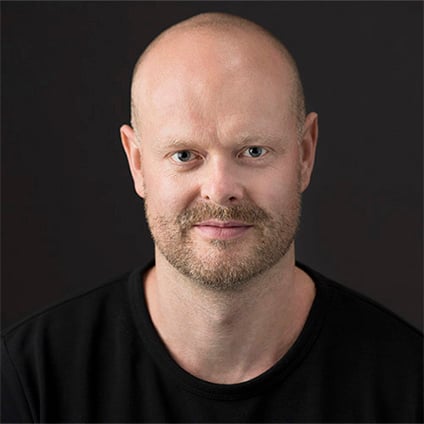
Joel Monk
Joel Monk is a leadership coach, educator and entrepreneur. He co-founded Coaches Rising, a company on the cutting edge of online coach training with a community of over 65,000 coaches. Coaches Rising programs regularly include participants from every continent on the planet and they have collaborated with some of the leading minds in the field of human development and coaching. Joel is also a leadership coach, coaching at companies such as THNK, Booking.com, Siemens and Naspers. Joel has designed and led several entrepreneurial and leadership development programs, at places such as Socionext, THNK and The Impact Hub Amsterdam.


