1X
Subscribe:

Just enter your details — and we’ll send you the latest insights right away.
02:00 The wheel of time teaching
08:00 Encountering the existential intensity
12:00 Developing a cosmological map
19:00 Sacred world as local and embodied
25:00 Leveraging the imaginal realm to create the future
31:00 Working with the different levels of self
37:00 Developmental unfolding through the heart
42:00 Fostering personal and collective coherence
45:00 The internal and external dimensions of synchronicity
49:45 Maintaining the centre as humans
54:00 Aligning with planetary purpose
1:02:00 Desire calling forth the new world
1:06:45 A sacred secular operating system
1:09:00 Making love to the relational vision
1:15:30 Anchoring the practices
Resources Mentioned:
Kalachakra
Andor’s speech
Circling
Stages of adult development
Sociocracy
Holacracy
Joel Monk: [00:00:02] Alright, here we go, John.
John Churchill: [00:00:08] It's good to be with you.
Joel Monk: [00:00:10] It's good to be with you, John. Yeah, yeah, I thoroughly enjoyed our last conversation. And we had a lot of great feedback about it. More than maybe some of our normal podcasts. So I recommend people check that one out too. So thanks for that. Roger. Um, let me read out your bio.
Joel Monk: Um, so I'll read this out to people who don't know who you are. So Dr. John Churchill is a Dharma teacher, Mandala architect, and clinical psychologist, a founding member of Ken Wilber's Integral Institute. [00:01:01] He spent over 25 years developing Fourth Turning Planetary Dharma, a somatically based path integrating psychodynamic healing, adult development, and meditation. His work includes the redesigned Nine Stages of Calm-Staying and Embodying the Open Ground. Previously, John served as a Buddhist monk at Samye Ling Monastery in Scotland where he received the planetary Dharma transmissions and spent 15 years training in Great Seal meditation under Daniel P. Brown. So, Yeah, I mean, I get super curious to ask you about a bunch of that stuff too, but we're going to talk about the Bodhisattva path today and I think it's such a relevant idea and pathway, actually, more than an idea, psychoactive pathway for our times. Before we articulate what it is, I'm just wondering
Joel Monk: [00:02:05] people feel it now, you know, we're in some... something. Yeah, something's going on and I'm not sure where we're heading, but what do some of the traditions you've been steeped in say about our times?
John Churchill: [00:02:22] Well, clearly one of the things that we all have to do is make meaning of the situation that we And naturally, we are, we are story, living, story breathing beings. And not only that, I think that the, that the collective unconscious, if you were, the human unconscious, the collective intelligence, still, is at the level of response, that it responds to story and not philosophy. [00:03:04] So we could, so we take the perspective, let's say, of the Judeo-Christian tradition. To some extent, when we look at the world outside, let's when I do, I can't see that we're going to be living in a Gregorian calendar in 30 years. time is a central organizing principle of a culture, time's change, kind of synchronization that AI is going to be interested in is going to force in you type. So from the perspective of those mythic religions, we're at the end of time, and my sense [00:04:06] based on the fact that mystics have the capacity, there is a capacity to into it through time, but then you're always going to interpret it based on what your interpretation is.
John Churchill: So, mythically, I'd say we're at the end of time. But I think as inter-really develop human beings we would say were the end of a time and the beginning of something else. So that's a, but we also have to recognize what that is methodically, which is a big deal, a big change. And so those kinds of narrative structures, the end of a time, a judgment day, and by that I just mean a decision. There's a decision that our civilization [00:05:05] And the wheel goes one way or the other way or both ways at the same time, you know, driven by AI, which is, um, in my mind, I've mythically speaking. All technology is a form of fire.
John Churchill: And by that, I mean, we first built our first tools through fire and now I look around the room and you look around the room and listen as look around the room, everything has been built by fire. Right, and now we have Naepop, like Naepop, gas now, gasoline goes on to that. And who knows, where we're going? So, like, we're, I think the Greeks called this like pyrosis, within their understanding of the kind of cycle of time, there's a moment of gray fire. And so the question of course is whether the human, whether we can contain that fire within our psyche, within a vessel, or does it leak out and get expressed through the world? [00:06:11] So that all sounds a little like, you know, blue and blue, but actually it isn't. I just think that's speaking to those Western traditions. As far as the east goes, and I'm not, you don't know a lot about the south, so I can't with speak to that.
John Churchill: But within the eastern tradition, the one that I'm most aware of is the Colette Chakra, which is the time wheel, teaching, which is the most sophisticated tantra of Shakyimuni Buddha and of the Mahayana, the Baajriana, and You know, what time we all teaching is really about is about the transition from one time to another time. So, speaks about the same thing, the end of a time at the beginning of another. And what is necessary to, for that bridge, for that, you know, what kind of time machine is necessary, if you will, to make that transition. [00:07:00] And they talk about something similar, like that the, I put in contemporary language, the forces of the kind of cumulative comic forces, a multi-generational trauma that has become institutionalized, getting to a point where there's a great planetary alchemical process, if you will, between forces of confusion and those of that are attempting to awaken. And within that context, the vision is of kind of planetary, the way I translate it is like a garden University of Truth, Beauty and Goodness, 200, 300 years from now, we're possibility of that. And I think that was intuitive by those stages just based on looking at cause and effect and having an, again, some of these non-on-orecapacities and getting a sense of how, like, how much baggage, comic baggage can humanity take before we need to take a really big, dump.
John Churchill: [00:08:06] if you want. So we're an incredibly creative moment, inspirational moment, a time between worlds, the death of an old and the beginning of something new. And I think all those traditions
Joel Monk: [00:08:31] Yeah, it feels so descriptive of our times the way you talk about it and the sense of confusion and collective trauma that feels like it's surfacing into the light, but then a massive orientation. Well, at least maybe I'm in a bubble, but it seems like more and more people are asking deeper questions [00:09:00] different mystical practices and meditation and embodiment. So it's all kind of in the mix and yeah and you talked about like a vessel or the what's necessary in our times and maybe this is a segue into the Bodhisattva path but do they do those traditions speak of how we could hold ourselves because it seems like you know, I can feel it in me. It's like I can feel how the conditions of our times are evoking certain response and a way of being perhaps.
John Churchill: [00:09:37] I'm curious. What is that? Like, what is that response? What's that response? Before I answer that, let's just need to get myself out of that to so I can speak to how that's living inside of you.
Joel Monk: [00:09:53] Yeah, great. So it's like a forge. It's like there's a, you know, you talk to fire, actually. It's like being in a crucible. [00:10:00] So sometimes what happens is I call apps, you know, there's a sense of fear and there's a freezing and you know, I want to kind of dissociate or distract myself. So that can happen, but actually one of the practices I've been called into is, to sit with myself in the intensity and kind of surrender and welcome to it and welcome and welcome it. And there's a kind of transmutation of the energy of intensity, you know, liberation of that energy.
Joel Monk: And then just the last thing I would say is, Like, I've shared this on the podcast, but it's like this phrase like I burn my life for a sunrise I'll never see, which I saw on Andor, you know, it's like, and it touched me in. So these, or in my art school and people said when the going gets weird, the weird get going. And I can feel that in me too, it's like, so there's this sense of, of like some kind of like, ah, like energy of wanting to serve, [00:11:08] in a playful way, give my gifts, if the ship's going down, I'm gonna go down partying, like celebrating life. That's the mix of stuff, yeah.
John Churchill: [00:11:18] Right. Well, yes, I think that's true for me too, and I have no doubt that it's true for many of our listeners too. So we recognize that there are intense energies that are coming, that are rising from this situation. I guess the question then is, and allow them to continue to serve what it is that we all are trying to give. Okay, so, so we want to explore how those energies find fine direction within the [00:12:09] So, I, well, I think the first thing is to recognize that, you know, when I talk about planetary Dharma, I, I, I refer that not to as a kind of my own thing, but what, what is unfolding and what is being asked of of us, which is, If we look at the powerful contemplative traditions, the framing, if you will, of many of these practices, tends to be philosophical.
John Churchill: If it's Buddhist or theological, if you will, if it's kind of Christian Islamic today, mysticism. So the first thing is to recognize that, rather than those practices being separated from what some Iraq, you know, well, those traditions being separated from the world that actually, that humanity is woven into a planetary system and that those deeper states [00:13:25] our phenomenological experience of deeper dimensions of the planetary intelligence itself. So that actually we are completely woven into a single intelligence that's woven into a much larger that a solar field as well. And the reason that that's important is that gives us the opportunity to then deeply align with what's happening on the planet, understanding that it's part of a much deeper transformative process that goes through, like many of the dimensions of the mystics will talk about the subtle dimensions, the imaginal dimensions, and even deeper than that. [00:14:13] They are all part and not separate from what's happening on the ground.
John Churchill: And so that, because at some point you need some cosmology, so you need some, we need a story that we, the weaves, the whole together, if that makes sense, so that we don't feel like we don't feel like we need to escape. Because of course that was some of the flavor of the great traditions, as it was a little bit flavor of like, let's get the hell out of here. So that's, so that's, I think that's a really important frame is that sacred world. So I think from a Buddhist perspective, the left and talk about the tantras as having a mandala, like a mandala is like a whole world of practice within a kind of envisioned cosmology, if that makes sense. [00:15:10] And so the difference now is that actually that mandala is actually the planetary system. with all of its dimensions. So just like we have a physical body and a third body, and we have these whole 90s system of channels and meridians and chakras and centers, the planetary intake, the planet has the same thing. It's a living, breathing, organism that goes through moting cycles and what have you.
John Churchill: And that the collective unconscious of the imaginal level is one dimension of that. and trees we share with all sentient beings and those of our listeners who have taken perhaps some plant medicine, I've probably had some experience that the collective unconscious isn't just human, it's also full of like the the whole phylogenetic evolutionary processes there. [00:16:06] So there's that dimension of the collective that you and I are kind of access. And then there's also, let's say, let's call it the newest fear or the archetypal dimension, meaning that our minds and our thought processes, our expressions of planetary intelligence, we are a significant, we are the intelligence of a planetary system waking up. as it goes from, you know, formal operational thinking to systemic, to multi-systemic, you know, all the way up until we awaken to a halonic recognition that we are, the whole, that we are planetary system. And so the first thing is, is that the Bodhisattva path and this practices are kind of re-contextualized within that process. That we're awakening to the fullest awakening as a holonic awakening to our deep independence with a planetary system that we are part of. [00:17:08] So that's really important, that's super important.
John Churchill: your brain doesn't know the difference between what you imagine to be real and what is real. And so, not having a cosmology is still a cosmology. So, if that makes sense. So, we do, you do, just like you, you do, we do want to have a diamond cosmology that gives you a certain degree of confidence to face death, because The archimical process is centered around death and transformation. Our own personal death and transformation. And within these larger, let's say, the color chakra and these other perspectives, which are, let's say, archimical practices for the collective, right? [00:18:01] So you've got to, you know, how do you take an archimical practice and then make it something that thousands of people do?
John Churchill: All right, that's kind of what's necessary. And so that involves the recognition of what needs to die, of what's dying and being willing to die in to die together. And also what needs to be born. And so that takes a depth of conviction to face your once more telly. And so, So from a kind of messy meta-modern perspective, if you were, it wouldn't matter whether what I'm saying is real or not. What matters is the fact that these beliefs are psychoactive and they provide a vessel for a deep purpose and meaning and confidence to give it our all. So that's, I think that that's, so there we have a kind of the importance of cosmology and the aligning it with sacred world.
John Churchill: [00:19:08] And the truth is, is most of the more modern perennial traditions point to that reality. It's like sacred world is a real thing. So that's, that's, that's the Let me actually, let me speak a little bit more about what that kind of means in practice from within that frame of a kind of planetary intelligence that seeks to give birth to a new cultural expression and new planetary expression. where there's a necessity for deep unity and deep diversity. [00:20:04] So, the deep diversity comes from the more universal dimensions. And the deep diversity comes from each of us, deepening into embodiment and deepening into our relationship with the natural world around us. You know, what makes someone Scottish is the Heather and the Stag and what makes somebody, you know, Native American, if you will, the Florida, the former and the creatures of the local area, right?
John Churchill: So the kind of uniqueness that each of us have to drill into is around us. and then we have the universality as well. So I think that's also part of that vision is not just a universal, not just universality, but then how that deep structure supports each of us deeply coming home to sacred world. [00:21:04] as it presents itself in our lives outside our doors. So nature, we're talking about the awakening both to the kind of a new log-offs, but also the feminine as she's expressed through the earth and the rabbits and the birds and the flowers that sacred world is local and embodied. And I say that because otherwise the University can wash all of that out and we all know that that's if we do that we'll lose so much. So we don't want to lose.
John Churchill: We don't want to see all the cuisines of the world merge into some sort of porridge, right? [00:22:01] And then that being said then, let's take the list with our listeners, this kind of envision a planetary system as having seven bodies, much like it said that a human does, and that there's a kind of molting and cyclic process of kind of peristalsist that moves through those systems and that when a culture immacilization is about to be born, It is first born, and again, this is going to sound a little, it's kind of a esoteric, but let's just kind of imagine it to be so. It begins to be shaped and born in the subtle already, which begins to inform the And by that I mean that if we took the perspective that the civilization that you and I and our listeners would want to be participating in, in let's say 300 years time, let's just imagine that actually it already exists and what I mean by that is it already exists in the subtle and that both the disembodied souls, if you will, that are [00:23:24] are already kind of functioning in that, preparing the systems and working out what, what the new financial systems might be, the new medical systems, the kind of the blueprint, if you were. The traditional initial tree systems.
John Churchill: So we have to separate, traditions that help us awaken to the awakened awareness that I'm non-dual traditions and which are really important because they help us awaken to the deathless already. [00:24:02] But there's a whole initiative process that's related to the transformation of our neurochemistry and the rewiring that very few of us have done because you need very specific kinds of environments to do that. And that's more the kind of alchemist, the deep alchemical work that we saw in the, that isn't the West, but you definitely see it, see it held by, You know the Tibetans and the kind of the Indians and the Daoists, but within that context, what that is, that those processes are initiating the personality, body and the flesh into continuity of consciousness through those rounds. Meaning the reason we have amnesia is not, we might actually be, and many of our listeners, and again this is part of the story, are actually already functioning [00:25:01] both in body and also out of body.
John Churchill: But because the cultural body hasn't been initiated, we don't remember anything. Except for those most subtle levels of intuition that actually can pass through all those layers simultaneously. So again, this is how I'm sure what I'm trying to do here is give you a kind of an updated contemporary version of what the most sophisticated of these traditions are pointing to, with that right sense, and re-translating it. And again, this doesn't what's important is as a belief structure, what's the psychoactive effect of that? Well, the psychoactive effect of having, like, confidence that even though you have a that your deeper level of functioning is like, it's like walking out of one office and walking into another office. [00:26:01] You can't make sense?
John Churchill: Okay, if that was true, that would give you a hell of a lot more confidence in what's in the process. and like an inevitability like this is going to happen because it isn't just about humanity, it's also about a planetary process of transformation that is perhaps more biological than it is philosophical. If that makes sense, it's like a biome, a spiritual biological process of delivering And so, in those traditions, you have two things, you have, well, that, the manifestation of that civilization is that say 300 years in the future, but it's also right here right now. And so, the degree that you commit to and see, and this is where the intuition into place with the imaginal realm, to the extent that you can see an envision that that might be true. [00:27:05] then you're able to have a vertical access of, I'm already there, we're already there. And if I die, that's where I'm going. Right, to that party.
John Churchill: And we're going forwards to manifesting that in the world. And that's called Sacred View. and then so in the tantras that sacred view of the mandala and then you also have the what would be called deity pride. Well if we update that that's like archetypal pride or soul confidence in that view. So, that's at one level of practice for the personality structure is that level of practice. There's other practices, mindfulness and body-mint, transcendental practices, the non-dual essence practices that that makes sense. [00:28:04] But the practice of maintaining sacred worldview, And again, even if that isn't true, is a diamond, it's a diamond vessel of confidence that allows each of us to let's give it our all, let's give it our all.
John Churchill: So that's the, maybe that's the kind of contemporary worldview and it isn't to say that one needs to have that, but it does weave in, let's say, everything we know about our trans-personal investigations over the last 100 years in the Western civilization. Right? From meditation to medicine, medicine work, the breath work to Wagyu. So that's the context, which itself is like a lack of, and it's itself as a practice of maintaining view, right? [00:29:07] Um, any any questions about that? I mean, there's some more to say.
Joel Monk: [00:29:14] Yeah, it's brilliant. Well, it kind of just reflect and I do have questions, but I just want to give you as much space as possible. First of all, I can feel how psychoactive that view is already, you know, just by you talking about it, you know, and you mentioned word diamond, but there is a kind of sense of, um, subtle expansive light, you know. That's a very crude way of starting to talk about it, but I can feel how I can feel what that evokes in me, the view you've just described, and it's very powerful. And I wonder, because there's many questions I have about what first of all, it honors what I think a lot of people have felt which is if it's just about transcendence or non-doality, there's feel something lacking, you know, people feel what about my human, my beautiful human existence and this beautiful sacred world. [00:30:14] So I hear you weaving those together but breaking out of a materialist worldview.
Joel Monk: I think that's what's one of the things I see now is like whether it's scientists or whether it's the telepathy tapes, which, you know, has been critiqued, but was huge. It's like the material worldview is being dismantled and your view, I feel, fits, you know, it's obviously includes the material, but it's way beyond that. And so, I want to ask you about the initiatory processes and purification, purpose, et cetera, but first I wonder, and just feel free to share what you feel is most important, because I think this conversation will inspire a lot of people, because there's a lot of pessimism and doom around right now, and I understand that. [00:31:11] But it's like we will not create a new world. I saw a quote, it's like the future is created by the optimists. And it's not to have a naive optimism.
Joel Monk: But if we're only rooted in doom and pessimism, I don't think that's where we're going to create the new world from. So I think you're going to learn the word before. Exactly. So what, like, please feel free to take this way you want to go, but I wonder about how we might practice with that psychoactive view you've just outlined. Is there a way that you invite people to deepen into that and be able to hold it?
John Churchill: [00:31:47] Sure. I think there's something that's really important here is we have to thank God that psychology has been a vessel for the last 100 years of protecting our subjectivity. [00:32:01] But now it is dangerous if we think of all of these practices as being psychological and not being psycho-ecological, right, And so, even within that perspective, humanity, you and I sit within in ecology and part of our function is also to feed that ecology. So we are feeding, we are feeding the planetary system, we have a function, an active function that isn't just psychological, it is woven into a sacred world. In terms of practice, Well, let's talk about let's talk about the Bodhisattva path a little bit more. What it necessitates and how it awakens.
John Churchill: So what clearly as you said, we're in an alchemical process and alchemical process doesn't always go, sometimes the vessel explodes, sometimes too much heat and it all dries up, sometimes too much water and everything goes like to goop. [00:33:11] But the good news is there's a process and the good news is to extend the more and more people awaken to that where you know, more and more people are able to participate in I'd like to, yeah, so let's talk about it. Let's talk about the difference between agreement coherence and alignment, which is which in my mind is related to like three different dimensions of who we are, personality, the archetypal self or soul and spirit or the fundamental planetary ecosystems, right. And so, many of all, I think all of our listeners, I think we're all pretty much in agreement about what's going on, right? [00:34:08] I mean, I would imagine maybe like 98% agreement. And all of us, I'm imagining have been in places of deep coherence where we feel the power of we, and deep into subjectivity, which essentially we could say is the heart mind coming online.
John Churchill: But would you agree with me and that that's been your experiences like deep into subjective spaces? We spaces where like there's a deep, there's a sense of autonomy and communion simultaneously. And we, and we sense like, wow, this, this is, this is something, you know, and we all crave that. Um, however, unfortunately coherence isn't enough because it's like magnetic and it kind of it's not, it doesn't, it doesn't have as enough structure in the psyche. [00:35:04] Um, so there's a deeper, a deeper layer, which relates to alignment. Um, and so we can think of alignment here, meaning aligning with planetary purpose. So, aligning with a much larger process that is multi-generational, multi-incarnational, and again, this is like narrative, but it helps to have that narrative, because as you said, what's that end-or-quote to see a sunrise? Yeah, please.
John Churchill: Yeah, I burn my life for a sunrise I'll never see. That's right, I'll burn my life. Exactly. So, um, So alignment is about aligning with that truth. But within the context that you will see it and participate in it, but maybe it's not in this flashy vehicle. And so alignment then has to do with when the non-dual. [00:36:03] So there's the non-dual states, right, which many of our friends have accessed, which happen in credible power.
John Churchill: But actually, there's non-dual states also And those subtle structures are related to purpose. They're related to like profoundly powerful energies that when not only are you in that state but when that state becomes a structure, if that makes sense, right? Like so, as the state becomes more and more of a state structure and to become a structure, along with that structure, become is purpose. And actually the purpose is part of that ground of being openness. It's there. But we might not recognize it if it isn't pointed out,
John Churchill: [00:37:04] because so much of this of the path at this point for many of our listeners and for all of us actually is about how the path is wired in. There was a great debate into bet called the Samade debate. I think it was a fourth century, probably not, because I'm not good with the dates, but it was basically that the debate around what kind of Buddhism was gonna be practiced in the whole of Tibet. But what was gonna be, What was going to be the main template? And the main lecture was between the, it was a Chinese, Zen, Zenish Master, who would have represented the Mahavudra Zobchen direct introduction stream. And there was Kamala Shila, who was introduced, who was like, he was holding the gradual path. And Big De Bay, and what, one out was the gradual path.
John Churchill: [00:38:00] not because one can't awaken who is already right here to non-doll states, but actually what matters is the integrative weave of how that is woven through the whole of our being, how that is woven through our cognition, through our purpose, through our self-structure, through our emotional body, into the physical body and into building civilization and culture, right? So why am I saying that? Because the practice, the wiring practice is directly related to the heart might and the understand and the experience that the the the the bodhisattva path is an unfolding, developmental unfolding through the heart, right? [00:39:02] Because you can have perspective, perspective, development that doesn't necessarily like grow inside of the heart, so you can have more, you know, you can have higher perspective or capacity, you know, fifth, sixth, seventh person perspective, but it's not actually right and yeah so that's so that's a really important piece to understand is is that the heart mind is the is central to this in a number of ways it's central yeah could you say we mean by the heart mind right I mean that um that uh uh That love wisdom, so love wisdom, the wisdom aspect is kind of the recognition, let's say, of both the deconstructive openness that many of us have experienced through insight and the constructive developmental process that that's understanding both of those construction deconstruction as a simultaneous is a form of wisdom.
John Churchill: [00:40:18] Right? If you just have one, that's a problem. If you just deconstruct everything you left in the complete openness, that's not helpful. And the other side of it's just constructing, then you're just constructing more sophisticated prison. So that doesn't help, helpful. So that's the wisdom side. And the love side, and this particular comes from the betrayer, transmission around the Mahayana, is that the felt sense of what we're talking about is deep relationality. So, we are being asked to learn about how to relate to the earth, how to relate to nature, how to relate to our ancestors, how to relate to our bodies, how to relate to our motions, how to relate to our self-structure.
John Churchill: [00:41:08] how to relate to each other, how to relate to the souls in terms of let's say coherence and then how to relate. So from that perspective, we are the path is all about right relationship. And I don't obviously, that doesn't just mean yes, it means yes, no. It means appropriate boundaries, but also appropriate openness. And so to the extent that love, so the experience of love, compassion, naturally permeates through all of those boundaries. So the deeper the love for the whole, the easier the insight is, because love is the felt recognition of the deep independence or right, but there it is, right? So in a net sense, when the two are conjoined, and seen as not being separate, which is a very particular flavor in all the traditions, because there are traditions that will separate and emphasize the mind aspect, the insight aspect more.
John Churchill: [00:42:20] And that was the great insight of the Mahayana, right? Formus emptiness emptiness is form, but what that really you could say is that's really what to do. That's the heart suture. So it's pointing to the heart and it's saying that the human heart is the heart is the heart of this. And the traditions will point to this. Three hearts. It's a physical heart. There's a subtle heart.
John Churchill: And there's a causal heart. The Kiddaya. That's the kind of the formus emptiness emptiness is form heart. But they all actually like the heart. So to the extent that you and I and our listeners care more and more about the world, and don't and feel ourselves and experience ourselves not to be separate from it. [00:43:04] Right? Then what happens, and this is probably true of everybody here, we've all been led on a hero's journey to be of greater degree of service, because we feel that we're not separate from them. And if you're not separate from that, you hear the bugle call and you leave the village and you begin the hero's journey.
John Churchill: So the archetypal structure of the hero's journey is the unfolding of the heart mind. And the heart as we all experience has a magnetic quality to it. And that's, you know, when we're in deep coherence with the we, we feel the magnetism, right, we can feel that we're pulled and we're magnetized into something larger than ourselves and all those great, we space practices from Circling and so on. [00:44:04] It's very, those are very pop, that's very intelligence, co-hears us to others, but it also we also know that it co-hears the brain. So the deeper the coherence of the deeper the strength of the heart, the more the brain gets co-heared to that. And of course, the heart also isn't just down in our chest. The other end of that sensory nerve is also in the brain.
John Churchill: So the heart is also intercutive in the center of the brain structure, not just in our chests. So to say that, you know, don't be in your head. Well, but the heart is also in your head. But that, right, it's not. So that process of deepening care and love and compassion for the whole brings about greater degrees of coherence that organize the brain. [00:45:06] And we could then say organize the psyche. And the greater degree of organization brings out a greater integrative self. But my hypothesis and what the traditions indicate is that what is what also leads to those higher stages of development coming online the right way.
John Churchill: Because they're coming online from a heart that is embracing a world system and in doing so wants to be a service. That, in the Buddhist tradition, has said that that heart-mind cognitively produces what we call direct non-conceptual valid cognition or intuition. The heart is the center of synchronicity. [00:46:03] It synchronizes in Asian medicine all of the meridian systems. And as I said, it synchronizes the brain to some degree. That process of synchronization allows for synchronicity, because the heart has a direct access knowing that is non-causal. We will taste it that, right? That is the heart mind.
John Churchill: That manifests within you and me as intuition. And the deeper the coherence and the wide of the vision brings about the intuitions regarding the kinds of responses that are needed to relate to somebody as a coach. or to intuit what a new financial system they based on decentralization might be, or what an artificial intelligence that is sovereign and aligned with planetary evolution might be. [00:47:16] So for those of our listeners, whose work is in the higher mind, and by that I mean like the sciences and kind of systems, and in those ways are related to the world that demand intelligence, alignment with the heart mind, aligns with the living functionality of the planetary system, and those where I said, those archetypal structures have been worked out and therefore are able to be brought down. The reason why the hard-mindists are important is, what often happens is people can have brief moments of that and then rather than continuing to offer that and service to the whole, try to monetize that. [00:48:02] So we have OpenAI that goes from a nonprofit here to serve the whole to a private corporation, making deals with the US government for surveillance. So that's what happens for each of us.
John Churchill: where we're not able to sustain the motivation at the heart, and it falls into the separate grasping of the kind of traumatized self structure. So we have that, and so that's one dimension of the heart that is both kind of informational, but for those of us who are coaches and therapists, that's then relational intuition, like knowing what to say, when to say it and how to say it to somebody, when you don't, you know, and every good coach that's listening knows how that works, you just, you, you, because you care enough about the person and you're attuned enough, you're able to deliver what needs to be delivered in real time without even necessarily [00:49:03] but you can't think about it if you need to. So that's one dimension of synchronicity. That's kind of internal, right? The external dimension of synchronicity. is then related to how we, as Bodhisattvas and we'd let's reframe the term Bodhisattvas as let's say planetary citizens. Because what we need to do is we need to bring all of this into, let's say 300 years from the future if we do get through this, all this is part of education.
John Churchill: This is part of human education. This is what it means to be a planetary human. And to that extent, you know, if you see the heart as being between the crown and the root, it's the center, the function of humanity is to maintain the center. Like to build civilization at the center, right, at fourth person perspective, if you were. And if we use like the stages model, there's some of our listeners know. [00:50:02] We know that both person perspective, it's early dimension has a horizontal dimension, which is where we'll equally horrors until we, that's the post-modern embrace. And then, as it matures into more of an intracative recognition, the what's also left out is the kind of developmental vertical access. Right.
John Churchill: You get the vertical, the vertical, and those two come together. And that's synchronistically the equal armed cross that is the symbol in alchemy of earth. and has four spokes and hence is the fourth turning, if you will. So everything is here from a planetary perspective to birth that civilization at the centre. And as it feels like if humanity was to have a function, our function is to hold that. So no matter how developed you are, we're still tending to the heart of what it means to be human and building a civilization from that perspective. [00:51:01] perhaps employing structures and technologies that come from higher levels of perspective of a capacity, but actually what it means to be human is not those higher perspectives, what means to be human is the heart. So it doesn't really matter that makes sense.
John Churchill: So what matters and most is that is the heart intelligence because it's where it all meets and it's where it can all be integrated. The heart, our human heart, is in resonance with a planetary heart. And so when we experience synchronicity, we experiencing the non-causal intelligence of the planetary system in dialogue with our own heart mind, in an attempt to support the unfolding of that large of that personal interpersonal collective process, that they're not separate. And so to the extent that our hearts become more and more aligned with that, then we invoke that the evoke a more and more synchronicity, which magnetizes, and that granted synchronicity, isn't enough, you have to then know how to have the skills to make use of what is arrived, what [00:52:21] and that path, that's the bodhisattva path, which is like walking into the world, loving the world in a deeper and deeper way, recognizing that it isn't separate from us. And therefore, recognizing that our own integration and the integration and healing of the world is inseparable. It's inseparable. And in doing so, then engage a process,
John Churchill: Let's say the tantras, let's say color chakra was the Tibetan, the Tibetan, indo Tibetan version of formalizing that into structure, into hierarchy. [00:53:02] And again, hierarchy here means sacred water. So it doesn't necessarily mean a pyramid power hierarchy, it just means structure. So for instance, sociocracy, Holacracy, all of those kind of turquoise structures that we're beginning to intuit into it. other structures, let's say, of what would be necessary to hold a kind of collective process, collective archimical process. Traditionally, it's very hierarchical in a vertical way, right? But part of the institutionalization of those processes is to then cohere in a line many people, into a larger process when you do that.
John Churchill: And again, that's ceremonial. And what that does is it aligns the synchronicity of many people into something that has the capacity for civilizational change. [00:54:06] Right, it's a harnessing within a structure. So part of all of our work is, how do we kind of make that transition into these new structures so that the group, the group intelligence, rather than like the group intelligence, can guide this. Okay, I'm going to add a little bit. So I think the truth is, in terms of how do we practice this? Well, most of us who are listening, we're already doing it.
John Churchill: Like you're already doing it. You're already, like that's the whole point. You're in sacred world within that view. You're already building these systems. It just adds a greater degree of conviction and that to recognize what needs to be let go of and what do we need to move into? [00:55:05] And then I think the last piece to add here and then I'll pass it back to you. Is the alignment piece. So alignment is related to hierarchy, structure, because it recognizes the power needs to be moved through structures that we are all aligned to.
John Churchill: And ideally, the work as I said, being done in decentralized, My sense is that's what they are designed for. The purpose piece to the extent that we realize, okay? So to the extent that we are willing to see the shadow. So the color chakra is a war tantra. It's war alchemy. What is it, what's it pointing to? As we all have to recognize the violence and aggression,
John Churchill: [00:56:03] you know both you know this both desire and this both a version but the degree to which the pathological war machine you know it military industrial financial all of that which we could just call empire to the degree we actually have to be willing to see that it's quite happy to make all of us and our children into dog food Right, that there is real psychopathic multi-generational processes and systems. And we're willing to see how destructive they are. Which is scary because it involves, we have to see how destructive we are because we're participating in them still. Until we have that sense of urgency like fuck, we need to like get out of this. Right, and to do that, you have to have a certain life. And our life depends upon it. Because otherwise, we'll fall back to a hang on a second.
John Churchill: My 401k, right? [00:57:02] You're going to fall back into those sort of extent that we can see that, that we're talking about the energies of destruction and death. When we can see that, and when we can then allow ourselves to feel how destructor we are within a vessel of deep embodiment, deep connection to earth, deep interpersonal coherence, and then add that energy, that energy produces the willingness and the energy of aligning with the whole planetary purpose. And then you, and then we'll all get the military grade specs related to what needs to happen, right? And by that, I mean, like the kind of like purpose, like, wow, well, we are going to die. [00:58:04] That's okay, but we would like to help see and leave behind something for our children. So yeah, so these are part of contemplative practice which is a part of how do you weave in your contemplative practice, deep embodiment, attenement, strong sense of sovereignty, deep sense of interconnectivity, the creative vision
John Churchill: the deep sense of purpose, the fundamental brilliant clarity of awakened awareness and the fundamental openness of everything and that's woven all together at the heart and that's that is what Alchemy is, it's like learning to weave all of those together in your practice and sustain it so that the neuroplasticity can weave all of those dimensions together simultaneously. [00:59:10] And then as best we can, we practice that in our lives.
Joel Monk: [00:59:20] Amazing. Yeah, did you want to stop there or did you want to?
John Churchill: [00:59:25] Yeah, because I've been talking to you. I've been talking to you. I've been talking to you. I'm tired of my own voice.
Joel Monk: [00:59:33] Well, look, hey, that was just exceptional and incredibly, incredibly inspiring for me to hear. And I just want to reflect something and then just ask more questions. So, so many of the things you're saying really speak to intuitions I had or to directions I've taken. For example, [01:00:01] you know, engaging in deconstructive practices, but at some point feeling like, oh, shit, like this is, I don't want to keep going in that direction. So turning back towards a kind of relational non-duality as opposed to a kind of void-like, transcendent non-duality as f-f-f-f-f-f-f-f-f-f-f-f-f-f-f-f-f-f-f-f-f-f-f-f-f-f-f-f-f-f-f-f-f-f-f-f-f-f-f-f-f-f-f-f-f-f-f-f-f-f-f-f-f-f-f-f-f-f-f-f-f-f-f-f-f-f-f-f-f-f-f-f-f-f felt incredibly nourishing and enlivening. And with that, there was a switch in my practice from moving up and out to kind of down and in, and becoming suddenly interested in initiation and refining my capacity, my subtle capacity to attune to the field,
Joel Monk: itself and allow that feel to move me, to kind of move through me and illuminate me. So everything you're talking about feels very resonant with that and [01:01:05] So I turn to the question and it's really about this process of initiation and alignment. Like one thing I'm hearing is the view. If you can have this sacred view, like I feel so alchemical, it kind of evocative, that's one thing. And then I'm hearing the gradual path is important because that's what the openings I've had, were one thing, but the journey of integrating those were a whole other thing, and to feel my life decompat mentalized, all the places in my life where I'm, you know, where awakening doesn't permeate. So I'm guessing slowly moving towards this question of like practice, because I'm hearing embodiment is important, like shadow work, integration in practice.
Joel Monk: [01:02:01] And I'm curious to ask you about, I think a lot of people listening will know about the efficacy of body work or of meditation, particularly a wake awareness meditation, you know, or. therapy. But I'm curious to ask you a more about initiation and, you know, codes of purpose. You mentioned in those non-doll states, there are, you know, these are my words, but like subtle codes of purpose, we can access. And, you know, find to me what feels like that deeper alignment How can we go about moving through those initiations and accessing codes of purpose? So we can show up and bring our gifts in the world. [01:03:02] And beyond just the, you know, let's, yeah, we've got to do our integrated therapeutic work, et cetera.
John Churchill: [01:03:10] Yeah. Great. So we have to recognize what particular initiation is necessary right now, because there will be a different moment in time, hopefully our children or grandchildren who can begin at the very beginning, and of course infrastructure is needed for that. So then the question that we're at, you know, what is the initiation that we're asked to be initiated into, in order to then allow And so that's particularly the initiation of the bodhisattva. So that's related to vowing, right, to continually practicing vowing into this process that we're describing. [01:04:13] what we're seeing the initiations related to medicine, to plant medicine, which are related to, there's also the initiations related to our sexuality.
John Churchill: So, what I mean by that is is that the, it isn't, Of course, we all have our own sexuality, but it's also like our sexuality. Like that energy, like all of these other energies as a collective energy. So there's a real necessity for that to be woven into the work that we're doing as well. [01:05:04] And why would that be well? Because... Once we have that deep motivation and that heart-scented weave, as the Dalalama puts it, little desire, little awakening, big, desire, big awakening. So there's the, to the extent that we can dedicate that energy to the whole.
John Churchill: That's, like, that's bringing it all the way down. Our grandchildren, our great grandchildren, no, I mean, I speak for myself, but I think I'm speaking for all of our listeners here, like sexuality was a definite initiation and adolescence, no, right, to and it's what initiated us into intimacy, into a depth of intimacy with others. [01:06:07] I think from both of us, and it also is what initiated as into that and reactivate to the attachment system because, you know, this is a man the last time I stuck up with sucked a breast was my mother's when I was an infant, so there's a gap. All right, and so the understanding, and people doing great work with this, right, with the armoring and neotontra, but to understand that that pleasure, The world that wants to be born, wants to be born from joy and pleasure and art and creativity. And so as you said, if we're going to go down, then we go down from what to go down in love. Making love. So that is a, that's a, because that provides energy.
John Churchill: [01:07:01] When I look at what we're trying to build on a civilizational level, I call it the sacred secular operating system. Like what is that operating system that allows all of us to align with a sacred humanistic view? with a unified language of experience, enough that no one teacher is like, it's my language, right? Enough that there's enough of a platform that the various Renaissance communities can kind of integrate. Underneath that is what I like to call a Padma fusion drive. Okay, so in each of our lives to the extent the Padma that like the purification of deep desire like how much do we desire that world? And to the extent that you're kind of running, you know, that you have this view running and commitment to the extent that the desire can be skillfully integrated into that.
John Churchill: [01:08:07] That's what produces massive, that's what increases the magnetism significantly. That's why at the core of the college chakra, you have the abium, the mother father, archetype of the universal mother and the universal father, so to speak. As, like, within the central nuclear reactor of our own psyches, right? So how do you unify wisdom and compassion and then skillful means?
Joel Monk: [01:08:38] I'm just having an insight, Because you're talking about desire in a very fundamental sense. And I'm just thinking about prayer for me. Like prayer is becoming incredibly important. Because it's like I've riff when I pray. Sometimes I use more formal prayer, but it's like a way of attuning the heart. to this field and speaking, giving words, like bringing down embodying this field of grace of intelligence. [01:09:08] And what's interesting is it's like, it can be a very sensual endeavor.
Joel Monk: And when I start praying, sometimes I might initially like how pray for things, you know, for myself as well. Like, but more and more, I was like, you know, at the heart of it, it's like I just pray for God's grace to live in my heart and to be an instrument of light, you know, like all those things that I want for myself, ultimately they start to become It's not, I don't want to make them wrong, but they don't, they don't, they're nothing compared to that core prayer, so and it's, and it's, so it's, it's desire. So I'm talking about that's why I'm bringing it in because it's like it's, it's deeply connected to, to a desire and realigning that desire with the, to drive for enlightenment and being a service. So yeah. [01:10:01] So yeah.
John Churchill: [01:10:01] So within relational mysticism, the love and the beloved is that is that deepest structure. To the extent that what we love is the beauty of that word, of either of the word that Earth is Eden, and that we see her both in her natural perfection and also how humanity could weave together, to the extent that we have that vision. And that vision is the union of the universal mother and the universal of that integration. And then to the extent that we realize that that's what we really desire. And then with the things that we desire in our life, the love that we have for the desire we have for everything, just like we have to transmute the energy of war, then that energy of desire needs to be brought to it. So that means that when you're [01:11:00] that you learn to make love with the whole vision, which is relational, so rather than just being a non-do vision, it's a non-do vision of she or he, depending upon what your inclination is or they, and that's fed then in your personal relationships because we view and so that's a recognising the importance of desire and I guess part of the, you know what I'm just thinking about prayer here is then like both a kind of repentance of like oh my gosh I've been a participant in this and then the willingness to like deeply desire to be part of the
John Churchill: you know and how deep can we all dig that like right how deep does that desire go how deeply do we desire our children and our grandchildren and our like to have a to have a beautiful good and true world and we have to and we are dig that I know I have to dig dig dig into that. [01:12:22] and use everything we can in every moment that we can cultivate that desire and that will feed the whole synchronicity process.
Joel Monk: [01:12:40] I've no doubt everything you're saying here will speak to a lot of people, it will touch them and it's kind of coherent, coherent, a lot of different elements of what people speak about on the path into a kind of cosmic kind of framing and I'm thinking of, you know, [01:13:07] I think, you know, that can sound a little like a new age, you know, I'm going to ignore, I'm going to ignore like the difficult things in life and kind of just pretend of things okay, but I think it speaks to a deep sense of being a beacon of light and that we can refine our perception in order to access this this cosmic sacred world as it is here right now as well. You know, yes, it can manifest more. Obviously things are not okay on some levels, but that there's a, you know, and I wonder, I think maybe this is maybe I know we're coming towards the end of our time soon, that there's a non-linear, that's what I'm going to get to, it's like, and there's a non-linear aspect to this of maybe how this might break forth in the world. [01:14:05] You mentioned 300 years, and I can't help myself ask this question, even though I know it's not the right question, but it's like 300 years sounds like a long time away. What do you make of the next three to five years?
Joel Monk: Because it feels like we're in the middle, maybe I would not, but to me it feels like we're in the, this is it now, you know?
John Churchill: [01:14:26] This is the same thing. Yeah, I say 300 years, so I don't sound like a new age. right, you know. I think the next 10 years are fundamental for the alignment of that process. So yes, I think it is the next. It's, we're in it right now, particularly the cause of the nature of AI. I mean, well, the Metacrisis, but AI, for instance, is like the fire of the whole process. So how that fire is aligned and what it's aligned to, which really is equal to do with what are we aligned with?
John Churchill: [01:15:05] Right. So yes, I would agree, we are in it right now and I think the next 10 years could be instrumental to come. I mean, that's always the case, but particularly now, yeah, particularly now.
Joel Monk: [01:15:23] Is there, I want to ask you about where we can find out about your work in a moment, but is there an invitation you would want to make to an on-listening right now? I mean, the whole conversation has been one of those for me, but an invitation for people who feel touched that something is a vote inside of them from what you're sharing in terms of how they make me orient themselves in our times, you know, in ways that serve them in the world, yeah.
John Churchill: [01:15:55] I mean, one suggestion I have shows that we could take some time, you know, take some time, even a day together and like offer, offer what we've just talked about as a transmission, so that it can then be practiced. [01:16:11] Right, so it's not me saying, hey, you can come and look at, here's my work over here, it's more like listen, what we're talking about as a transmission, this is how we put it together in practice, let's like wire it in and now, you know, like, I think that that's one way of doing it. But again, I'm not attached, I'm not attached to that, but that could be a, you know, I could be an offering. I love it. I think if we're speaking to all the troops out into the field, right, I think to the extent that we are all in a deep, heartfelt way looking for what the next unfolding is, it's going to reveal itself, and to the extent that we have a depth of proof of that, [01:17:04] If that makes sense, like we realize, oh, the heat is up, because if the heat is up, the desire is up. The hard field is up, and the synchronicity has a different degree of what it's going to draw into each of our lives. So I think we all have to recognize that practice is our life.
John Churchill: we have to recognize that we all have to move from coherence with one another to alignment. We have to then ask ourselves, hold that, what is that structure? And we have to hold that and it will begin to reveal itself because we're all collectively like, yes, you know, this is, this is needed. So in some ways, that's the simplest approach right now. [01:18:04] Aside from this larger question of how to the various communities come together with alignment, so that, you know, it took me only five to 10,000 people, but that's a, I think that will happen because we're all going to recognize the necessity for that. So I think it comes back to the depth of prayer, the depth of our concern, the depth of our love for our planet, for ourselves, for the whole. of feeling and from there also the depth of conviction and desire and willingness to give ourselves even more fully to what it is that each of us are doing and we will find our way.
Joel Monk: [01:19:08] Beautiful. We really matter. Yeah, it's so stunning, John. Like I'm very grateful to have you speak these words and to share them with our community and may they be part of that delighting of that flame around the world, that's already happening. And yeah, so I just want to celebrate the depth of transmission and the words you share today and I do want to ask people where they can find out more. I hope many people feel inspired to come and to practice with you. Where can we find out more about your website at shodama.com?
Joel Monk: Yeah, that's the website.
John Churchill: [01:19:59] Yeah, but you know, we offer extended programs but there is I think something here which is like just a kind of [01:20:06] like a single initiative, like, this is how, you know, transmission, that, that in some ways, because you're, we're also busy. We all have so many commitments and I know so many people are woven into all kinds of training. So in that sense, this conversation makes me reflect more upon, you know, as I said, what is kind of a, like, an initiatory offering. So I'm going to give that some thought as well because, So as I said, so many of our listeners, our sisters and brothers, like we're the same place, so it doesn't necessarily mean like more extended training. It just maybe it's like a cash-to-transmission and then continue onwards.
John Churchill: [01:21:00] And of course, the training is possible as well, but yeah.
Joel Monk: [01:21:04] Yeah, beautiful. Here we are, we're at the end of the podcast. Just a heads up again, if you're not on our mailing list and you want to stay in the loop about other things we create, then head to coachesrising.com, put your name in the sign-up box there. You'll also find some of our other offerings are online trainings for coaches there. And just want to end by wishing you well, and I'll see you again next time.

Dr. John Churchill
Dr. John Churchill, is a dharma teacher, mandala architect, and clinical psychologist. A founding member of Ken Wilber’s Integral Institute, he has spent over 25 years developing Fourth Turning Planetary Dharma—a somatically based path integrating psychodynamic healing, adult development, and meditation. His work includes the redesigned Nine Stages of Calm-Staying and Embodying the Open Ground. Previously, John served as a Buddhist monk at Samye Ling Monastery in Scotland, where he received the Planetary Dharma transmissions, and spent 15 years training in “Great Seal” meditation under Dr. Daniel P. Brown.
WEBSITE
https://www.planetarydharma.com
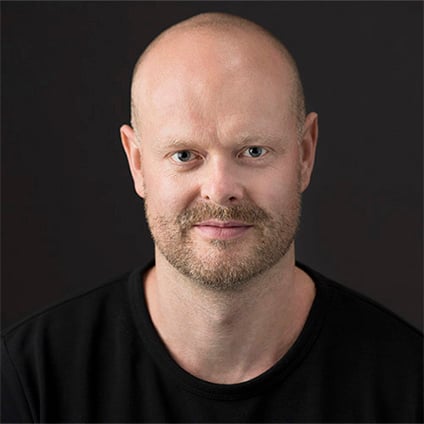
Joel Monk
Joel Monk is a leadership coach, educator and entrepreneur. He co-founded Coaches Rising, a company on the cutting edge of online coach training with a community of over 65,000 coaches. Coaches Rising programs regularly include participants from every continent on the planet and they have collaborated with some of the leading minds in the field of human development and coaching. Joel is also a leadership coach, coaching at companies such as THNK, Booking.com, Siemens and Naspers. Joel has designed and led several entrepreneurial and leadership development programs, at places such as Socionext, THNK and The Impact Hub Amsterdam.